

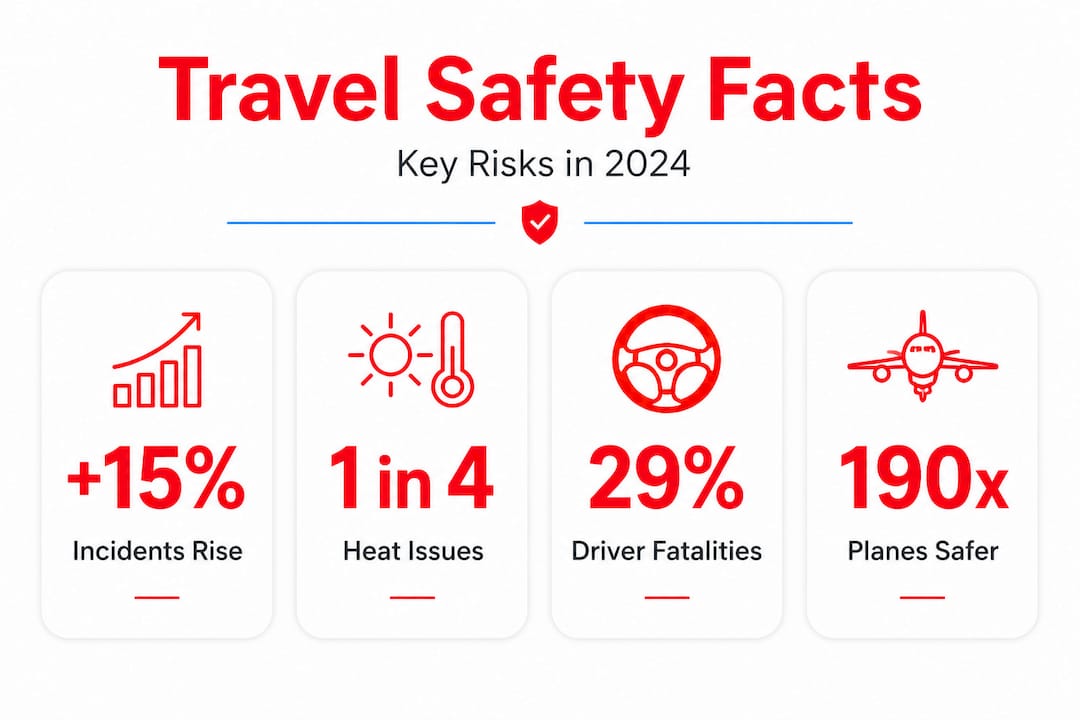
Travel feels routine until something goes wrong. Whether you’re a daily commuter, a parent loading the family car for a summer adventure, or a weekend cyclist heading into the hills, the risks on the road and beyond are quietly growing. Travel safety incidents rose 15% in 2024, giving you roughly a 1 in 217 chance of an incident on your next trip. That number might sound small, but when you multiply it across millions of journeys, the reality becomes impossible to ignore.
Table of Contents
- Understanding the real risks when travelling
- Why road travel poses unique dangers
- The truth about flying versus driving
- How to safeguard your journey: proactive travel safety strategies
- The uncomfortable truth most travellers miss about safety
- Travel safer with trusted protection solutions
- Frequently asked questions
Key Takeaways
| Point | Details |
|---|---|
| Travel risks are rising | Recent data shows incidents are up 15 percent, making proactive safety preparation vital. |
| Road journeys carry hidden dangers | Accidents involving working drivers and vulnerable road users make roads riskier than many realise. |
| Flying is far safer than driving | Commercial flights consistently report lower fatality rates per mile and journey than road travel. |
| Preparation prevents problems | Equipping yourself with the right knowledge and gear dramatically reduces travel dangers. |
| Mindset matters most | Staying alert and taking responsibility for your own safety is the most powerful protection. |
Understanding the real risks when travelling
To truly appreciate why travel safety demands our attention, let’s break down the facts about the risks encountered on the move. Most people think of travel dangers in dramatic terms: plane crashes, avalanches, or dramatic motorway pile-ups. The reality is far more ordinary, and in some ways, far more unsettling.
According to the latest data, the travel risk index recorded a 15% rise in reported safety incidents in 2024, with the odds sitting at 1 in 217 per trip. The three dominant drivers were heat-related illness, food allergies, and sexual assault. These are not freak accidents. They are predictable, recurring threats.
Consider heat. One in four UK travellers experienced a heat-related health issue in 2024. That figure covers everything from severe dehydration and heatstroke to milder but debilitating symptoms that cut trips short or require medical attention. As summers in Europe push into territory that was once rare, travelling without a plan for heat management is genuinely risky. Food allergies contributed to 14% more incidents year-on-year, driven partly by increased international travel and partly by poor labelling standards abroad. And assaults, particularly against solo female travellers, rose steadily across popular tourist corridors.
Here is a quick breakdown of the major categories and their relative scale:
| Risk category | Change in 2024 | Who is most affected |
|---|---|---|
| Heat-related illness | 1 in 4 UK travellers affected | All travellers, especially families |
| Food allergy incidents | +14% year-on-year | Those with dietary restrictions |
| Sexual assault | Rising trend | Solo travellers, particularly women |
| Road incidents | High and persistent | Commuters, adventure travellers |
What makes these risks particularly tricky is that they do not announce themselves. A poorly labelled dish at a restaurant abroad, a long afternoon hike without enough water, or a misread map in an unfamiliar city: each one represents a quiet failure of preparation rather than bad luck.
Different traveller profiles face different pressures. Families with children must account for young immune systems, distracted driving, and the sheer unpredictability of managing small people on the move. Adventure seekers push themselves into terrain where rescue services may be hours away. Commuters, paradoxically, face some of the highest cumulative risk simply through repetition and familiarity-driven complacency. You can read more about building a resilient travel routine in our guide to road health essentials, and make sure your kit is ready with our travel gear checklist.
Why road travel poses unique dangers
Beyond general risks, road travel presents its own set of dangers that every traveller should be aware of. Roads are where most of us spend the majority of our travel time, and they are where the statistics are most sobering.
In Great Britain, working drivers account for 29% of all road fatalities, representing 459 deaths in 2024 alone. In the United States, the evening rush hour accounts for 22.3% of all fatal crashes, totalling 8,384 incidents, with Friday being statistically the worst day to be on the road. These are not outliers. These are patterns. And patterns are preventable.
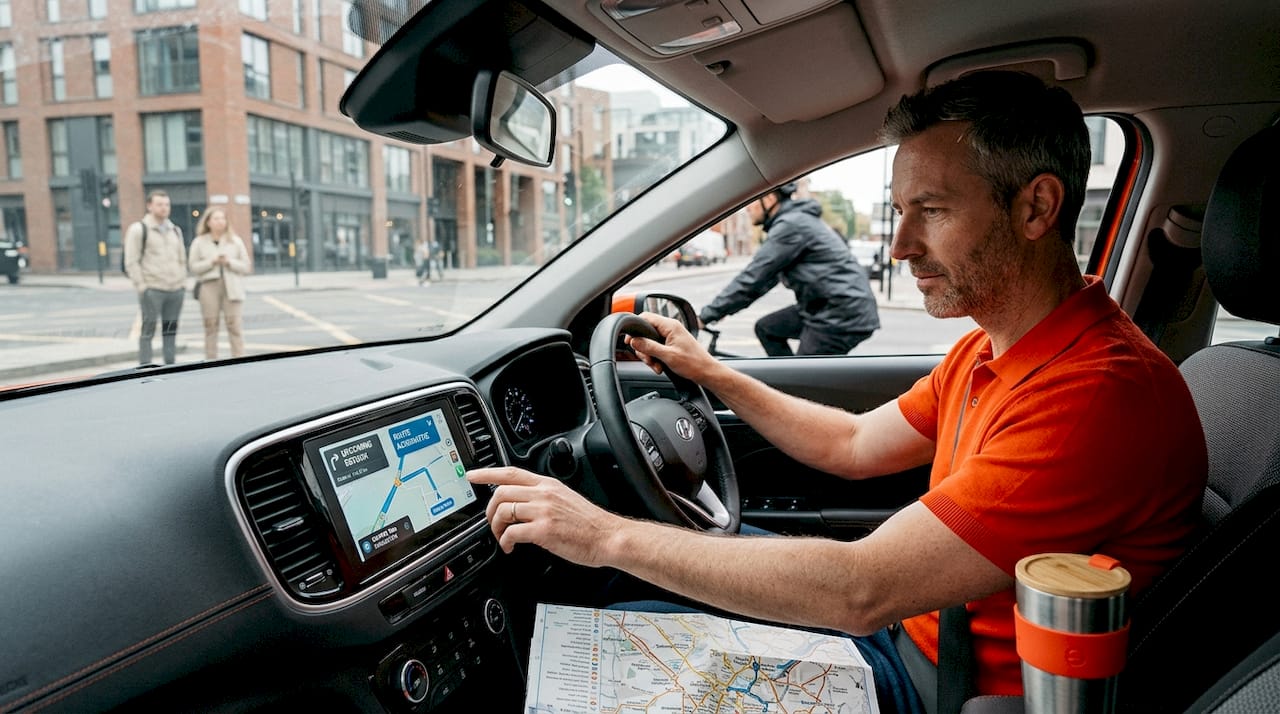
When it comes to who is most vulnerable, the picture is stark. Cyclists, pedestrians, and motorcyclists carry the highest fatality rates per mile travelled. Car occupants make up 43% of all fatalities in raw numbers, but their per-mile risk is significantly lower because of the protective shell of the vehicle around them. If you cycle to work, walk along busy roads, or ride a motorbike, your risk exposure per journey is substantially higher than the person in the seat next to you in traffic.
| Road user type | Share of total fatalities | Fatality rate per mile |
|---|---|---|
| Car occupants | 43% | Lower |
| Motorcyclists | High | Very high |
| Cyclists | Moderate | High |
| Pedestrians | Significant | High |
For families, the road trip adds layers of complexity. Children need regular breaks, which means more time in car parks and service stations. They get restless, which distracts drivers. Car seat compliance, correctly fitted and age-appropriate, remains one of the most important protective factors and one that is still frequently misused. Our full guide on family road trip safety covers this in detail, and our resource on road travel safety tips is worth a read before your next long drive with the kids.
Here are five practical steps to reduce your road risk:
- Avoid driving between 5pm and 8pm on Fridays if at all possible, as this is the highest-risk window statistically.
- Take a proper 15-minute break every two hours on long journeys, not just a fuel stop.
- Check tyre pressure and tread depth before any trip over two hours.
- Keep a basic first aid kit and emergency triangle in the boot at all times.
- If you cycle or ride a motorbike, make yourself visible with reflective gear even during daylight hours.
“The roads do not care how experienced you are. They respond to conditions, timing, and preparation. Every driver, cyclist, and pedestrian owes it to themselves and others to show up ready.”
Pro Tip: Set your satnav to avoid motorways during Friday evening rush hour. The time difference is often minimal, but the risk reduction is significant.
The truth about flying versus driving
Many worry about flying, yet the statistical reality may surprise you. Fear of flying is remarkably common, affecting roughly one in three people to some degree. Yet the numbers paint a very different picture from the anxiety most feel on the runway.
Commercial aviation is 190 times safer than driving when measured per mile. The figures break down to 0.003 fatalities per 100 million passenger miles for commercial flights, compared to 0.57 for road travel. Per journey, flying is approximately 95 times safer than getting into your car and driving the equivalent distance.
| Mode of travel | Fatalities per 100M passenger miles | Relative safety |
|---|---|---|
| Commercial aviation | 0.003 | Safest |
| Car travel | 0.57 | 190x more dangerous |
| Motorcycling | Significantly higher | Most dangerous |
This is not a case for complacency on planes. It is a case for redirecting your attention. If you are nervous about a two-hour flight but think nothing of a four-hour motorway drive, your risk assessment is back to front. The drive to the airport carries more statistical danger than the flight itself.
Pro Tip: If you travel by air frequently and also drive long distances, your road journeys are by far the more significant risk to manage. Focus your preparation there. Our guide on safe long-distance driving is one of the most practical starting points, and our roundup of travel safety accessories highlights the gear worth carrying.
The broader lesson here is that safety is not always where fear points us. Humans are notoriously poor at assessing risk because we conflate familiarity with safety. We have driven thousands of times. It feels normal. Flying feels unusual, therefore it feels dangerous. Accurate risk perception is itself a safety strategy.
How to safeguard your journey: proactive travel safety strategies
Knowing the risks is empowering, but taking action is what truly matters. The difference between a safe journey and a dangerous one is rarely about extraordinary circumstances. It is almost always about ordinary preparation done consistently.
Let’s start with the three rising threats from the 2024 data. Heat illness, allergy incidents, and assaults are each highly manageable with the right approach:
For heat:
- Carry a minimum of one litre of water per person for every two hours of travel in warm weather.
- Wear lightweight, breathable clothing and keep sun cream accessible, not buried in your bag.
- Plan outdoor activities in the morning or late afternoon, not between noon and 3pm.
- Know the symptoms of heat exhaustion: dizziness, heavy sweating, nausea, and rapid heartbeat.
For food allergies:
- Carry written allergy cards in the local language of your destination. Several free apps generate these for you.
- Never assume “may contain” warnings are absent just because a label does not show one abroad.
- Pack a supply of safe snacks for the first 48 hours of any international trip.
- If you carry an EpiPen, keep two accessible and check their expiry before departure.
For personal safety:
- Share your itinerary with someone at home before every trip.
- Use hotel safes for passports and keep digital copies of all documents in a secure cloud folder.
- Stay alert in crowds and avoid displaying expensive equipment unnecessarily.
For commuters and road travellers specifically, build these habits into every journey:
- Conduct a quick vehicle check before any trip over 90 minutes: tyres, lights, fuel, and mirrors.
- Programme your destination before you start driving, never whilst moving.
- Keep an emergency kit in the boot: first aid supplies, a warning triangle, a torch, and a foil blanket.
- Inform someone of your expected arrival time on long drives.
- Download offline maps before entering areas with unreliable mobile signal.
Our expert packing tips go deeper on organising your kit efficiently, and our guide to road trip safety gear covers the specific equipment worth having in the car. For those focused on hygiene and health on long journeys, our travel hygiene essentials guide is a practical companion.
Pro Tip: Create a “departure checklist” saved on your phone. Five minutes before every trip, run through it. It takes almost no time but catches the kind of small omissions that cause big problems later.
The uncomfortable truth most travellers miss about safety
Here is something worth sitting with. Most travellers, even experienced ones, spend more time choosing where to eat than thinking about what they would do if something went wrong. We invest heavily in the enjoyable parts of travel and very little in the unglamorous, practical work of staying safe.
The travel industry does not help. Marketing celebrates the spontaneous, the adventurous, the carefree. Safety content, when it appears at all, tends to be dry, formulaic, and easy to ignore. The result is a culture where preparation feels like pessimism. It is not.
The travellers who handle emergencies calmly are rarely the ones who got lucky. They are the ones who spent ten minutes thinking through scenarios before they left. Where is the nearest hospital? What is the local emergency number? Is there enough water in the car? Does everyone in the group know where to meet if they get separated?
Complacency is the real enemy on the road and elsewhere. The commuter who drives the same route every day is actually at heightened risk precisely because familiarity dulls attention. The family who has done the same summer drive a dozen times may have quietly let their car checks slide. Routine breeds the illusion of safety.
What actually reduces incidents is a mindset shift: from reactive to proactive. This means building safety habits into your normal routine, not just reaching for a checklist when something feels risky. If you build your travel comfort strategies around genuine wellbeing rather than just convenience, safety follows naturally.
We have seen this play out time and again through the stories our community shares. The parents who packed a first aid kit “just in case” and used it. The commuter who checked tyre pressure before a long Friday drive and caught a slow puncture before it became a blowout at speed. These are not dramatic moments. They are quiet, unglamorous acts of responsibility that kept people safe.
Safety does not require fearfulness. It requires awareness, routine, and a willingness to spend a little time on preparation before every journey.
Travel safer with trusted protection solutions
When you want lasting peace of mind on your travels, expert-backed equipment can make the difference between managing an incident confidently and being caught completely off guard.

At Convoy, we have been supporting travellers since 1991, and we know that the right gear does not weigh you down. It gives you confidence. Our lightweight safety helmet is built for cyclists and adventure travellers who want serious protection without bulk. For those who carry cargo, bikes, or valuable equipment on the road, our motion sensor alarm adds a layer of security that lets you rest easy at rest stops. And for travellers working in dusty, bright, or hazardous environments, our sealed safety goggles offer professional-grade eye protection with an adjustable fit for all-day comfort. Every product we carry is chosen with real journeys in mind.
Frequently asked questions
What are the most common travel safety incidents?
The most common incidents are heat-related illnesses, allergic reactions, and assaults, with road incidents also ranking high in reported cases across 2024 data.
Which is safer, driving or flying?
Flying is dramatically safer than driving. Commercial aviation is 190 times safer per mile and approximately 95 times safer per journey than road travel.
Why are vulnerable road users at higher risk?
Cyclists, pedestrians, and motorcyclists lack the structural protection of a vehicle, meaning their fatality rate per mile is substantially higher than that of car occupants despite making up a smaller proportion of total casualties.
How can I reduce my travel risk effectively?
Prepare with appropriate gear, identify hazards specific to your destination and travel type, and maintain alertness especially during high-risk periods such as the Friday evening rush hour.
Are families more at risk on road trips?
Families face specific compounding risks on road journeys, from distracted driving to child restraint errors, making structured preparation essential. Working driver fatality data underlines how serious road risk remains for those who drive regularly with dependants on board.