

Truck license: for lovers of the open road, it represents work, a profession, and a passion all at once. Many people can’t even imagine living a semi-nomadic life, while for others it’s a dream come true beyond just the good pay. If you also crave the unmatched sense of freedom that highways and country roads offer, if you don’t like fixed workplaces and daily routines, but you don’t shy away from challenges and want to be your own boss, then obtaining a truck license may be the best investment for you. Read our article and find out exactly what to expect if you choose truck freight transport as your livelihood!
Don’t start your truck license if...
Believe us, we don’t want to talk you out of choosing freedom. We love big machines, we enjoy the sight of merging lane lines on the highway, and the beautiful, diverse landscapes we pass during work. The evening breaks, the occasional beers, socializing with fellow truckers. The trucker lifestyle is special and very much lovable. But it’s definitely not for everyone. Before you decide to obtain a truck license, make sure to consider the following.
Don’t jump in if
- You’re only motivated by money
OK, international drivers really do earn well. However, the desire for higher income alone won’t be enough to keep you on the road. If you’re not drawn to this lifestyle at all and can’t appreciate the beauty of trucking beyond financial gain, then the time and money invested in getting a truck license may be wasted sooner than you think.
- You don’t tolerate monotony well and lack patience
Yes, there are challenges and adventures. You’ll see many interesting and beautiful things and meet great people. However, most of the job still involves sitting behind the wheel and driving. If you’re not mentally prepared to do this for long hours every day, then getting a truck license might not be the best decision.
- You don’t speak any foreign language and don’t want to learn one
If you’re thinking about international work, keep in mind that without language skills it will be much harder—if not impossible—to get by. Language knowledge also helps during breaks, making you feel less lonely, and significantly eases your work. If you feel trucking is in your blood but don’t yet speak any language, don’t worry: you’ll easily pick up the basics, and the rest will come naturally.
- You have a terrible sense of direction
All we’ll say here is: don’t let your pride decide how good your navigation skills are. If on a family vacation your spouse has to ask for directions 50 times just to get to Lake Balaton (because of course you think it’s unnecessary), then maybe navigation just isn’t your strong suit.
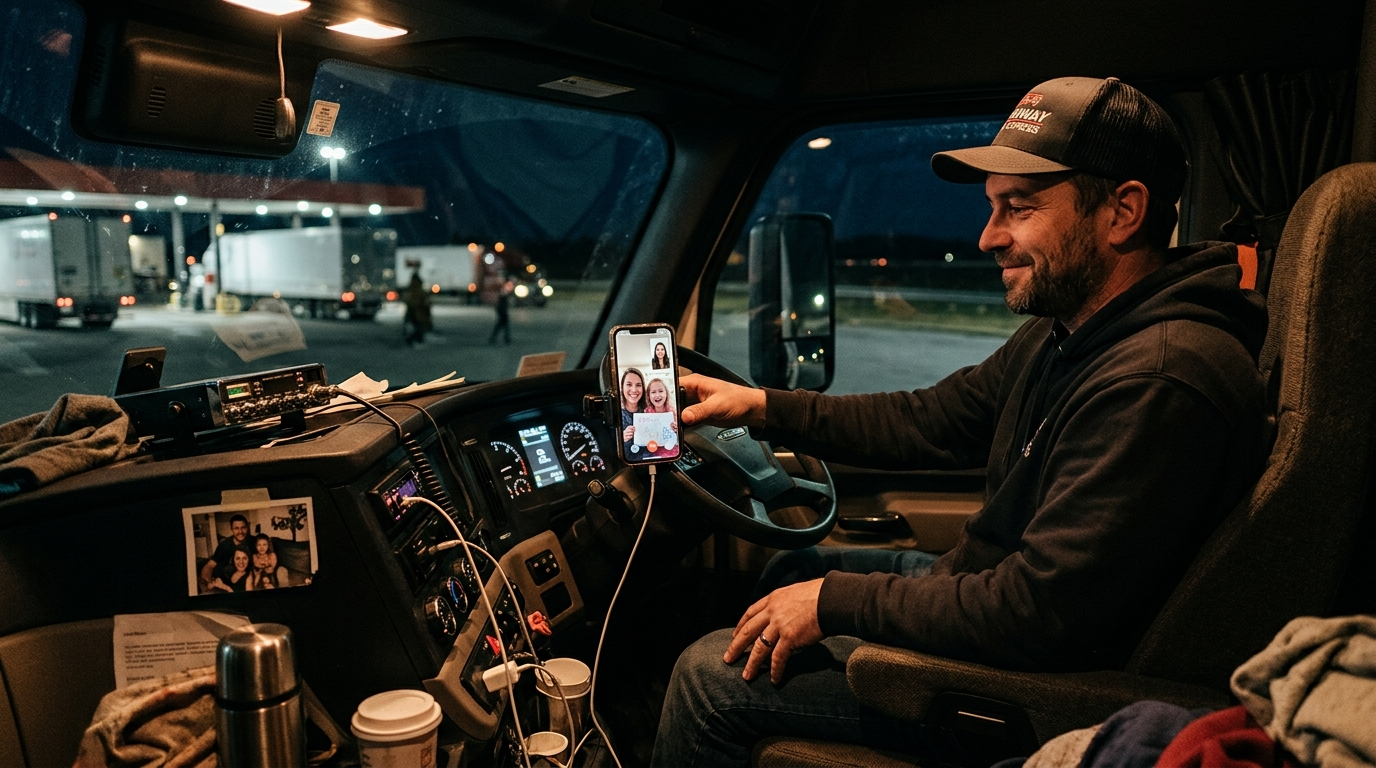
- You can’t handle being away from your family
We saved this for last, but it’s perhaps the strongest argument of all. Most of us find missing our family the hardest part while working. If you don’t have a family yet, you can skip this. If you do, then discuss in detail with your partner how you’ll manage childcare, upbringing, and household tasks during your often weeks-long absences. If you both believe you can handle the challenges, then chances are it won’t be a problem.
Ready, set, truck license!
If the above hasn’t discouraged you from your firm decision, then go for it! Let’s see what steps you need to take to finally drive a truck.
Who can get a truck license?
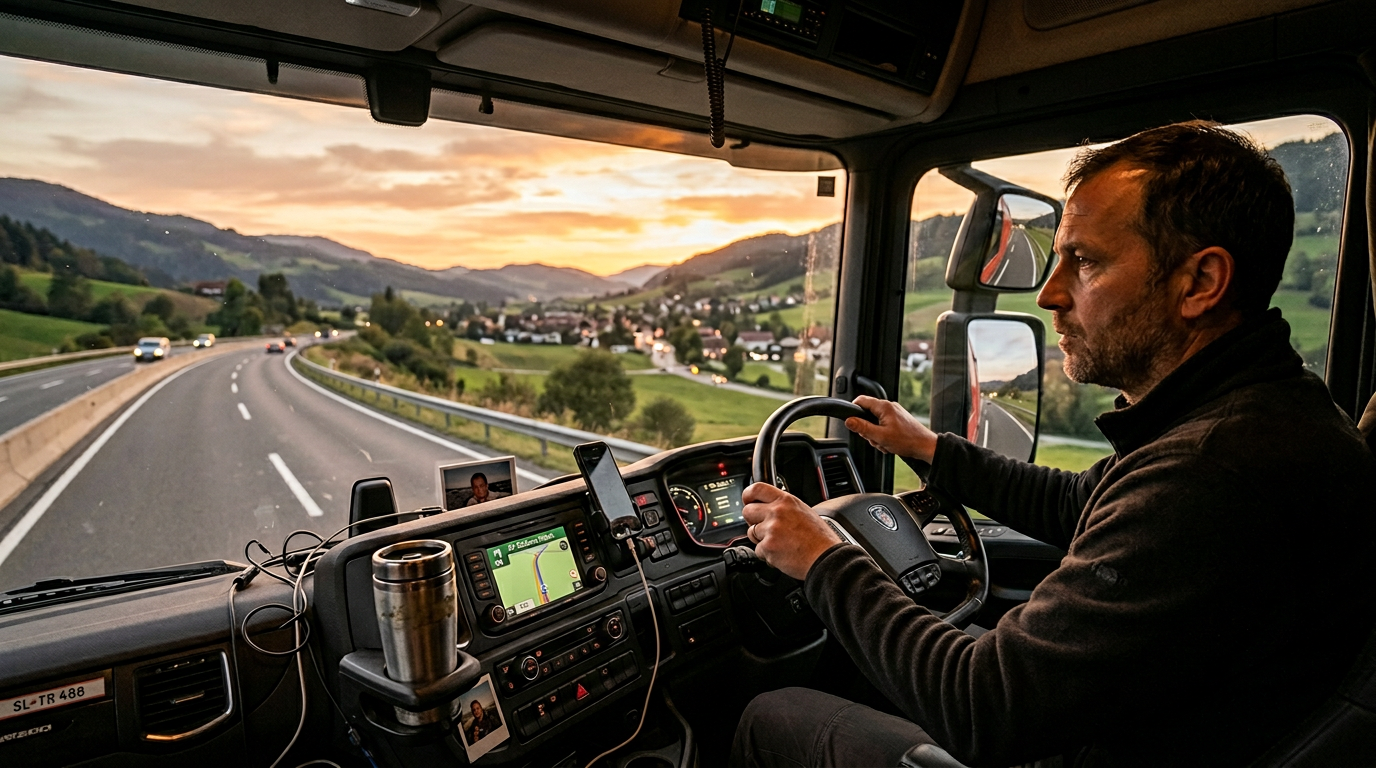
Do you already feel the gas pedal under your feet? That’s a great first step, but you’ll need a few more things. According to current regulations, to drive a truck—that is, a vehicle combination consisting of a “C” category motor vehicle and a heavy trailer—you must meet the following conditions:
- be at least 21 years old
- have at least 2 years of “B” category driving license
- have a basic level of education
- have a medical certificate
If you have all of these, that’s already one less obstacle standing between you and freely traveling Europe’s roads.
What licenses do you need to drive a truck?
The short answer: C+E. Just as a truck has two main parts, the required license also has two components. With a “C” category license, you can drive vehicles exceeding a maximum authorized mass of 3,500 kg. With this license, you can also attach a light trailer to your truck. However, if you want to tow a heavy trailer instead, you’ll need an additional qualification—this is the “E” category. So if you have “C+E,” you can get straight behind the wheel.
What does the process of obtaining a license involve?
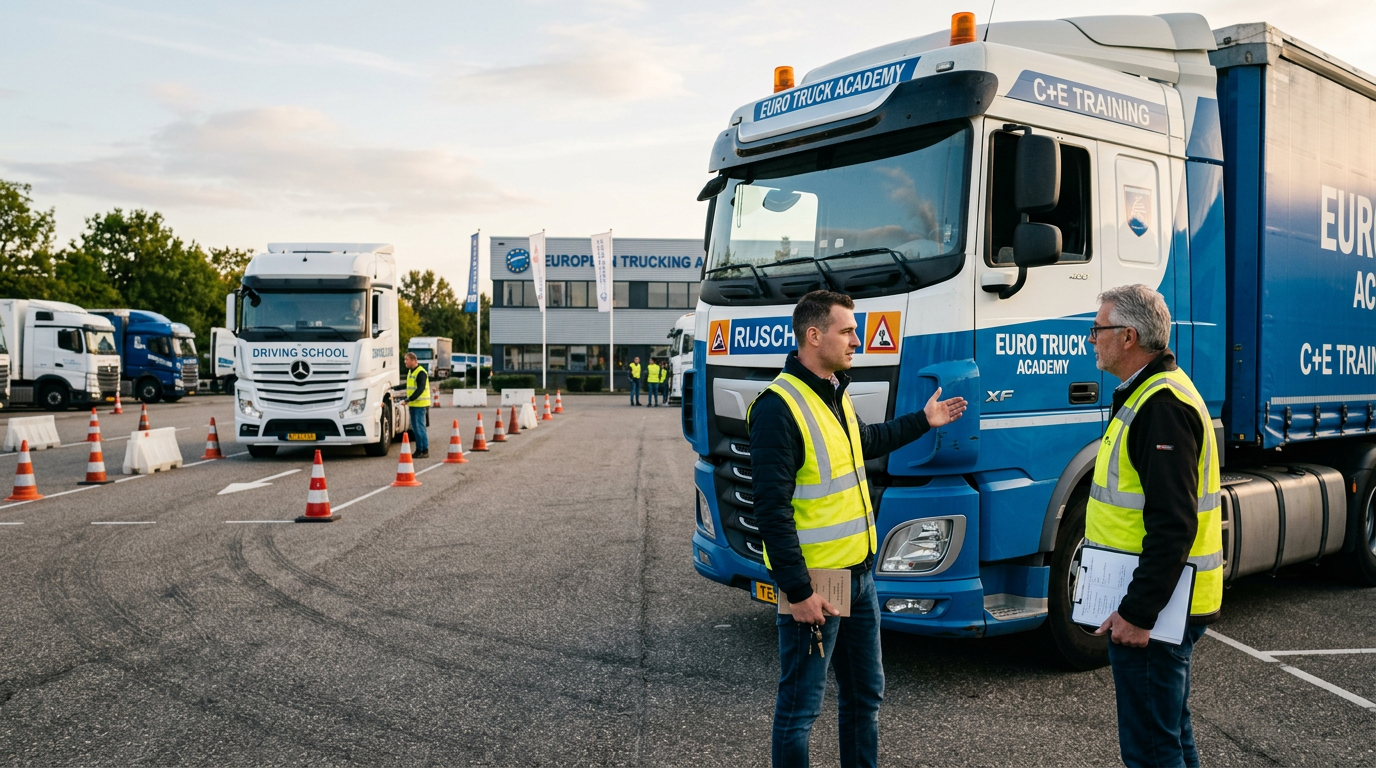
The very first and most important thing is having enough enthusiasm not just to start but to complete the process of obtaining your license. If you truly want a trucking job, passing the required theoretical and practical exams won’t be a problem. For the most dedicated, the theory part is often easy because they’ve known traffic rules and truck basics by heart since childhood. After passing the theoretical exam, the real excitement begins with training track driving using actual large vehicles. During this phase, you’ll learn driving techniques that a “B” category license holder has never even heard of. You’ll start learning how to responsibly handle and control the massive, powerful machine that you’ll later manage every day. After that come the routine and road exams, which for most drivers already bring genuine enjoyment. Something like a well-chilled evening beer with your favorite team’s match… or almost.
Finally, you can work! — Truck license and job
If you have your “C+E” license, you essentially have everything required to become an international truck driver. Beyond that, necessity, your employer, fellow truckers, and experience will teach you everything else—such as the varying traffic, transport law, customs, and financial regulations of different countries. So what can you actually do with a truck license?
Primarily, to deliver the entrusted cargo to its destination without damage. All while complying with current traffic regulations, safety rules, and instructions. However, transportation also involves administrative tasks such as maintaining a logbook, handling money, and calculating fees. In addition, you must be able to assess the technical condition of the truck. If a malfunction occurs, you need to determine its cause. Preventive maintenance is also part of the job, meaning you must take care of and maintain both the vehicle and its accessories. Not least, this can save you a lot of money, as preserving your equipment is cheaper than replacing it. So, are you ready? Then see you on the road soon! In the meantime, take a look at what you’ll want to equip your second home with!