

Most drivers who’ve faced a blown tyre on a motorway at dusk, or watched a child melt into full-scale chaos three hours into a ten-hour journey, will tell you the same thing: the road punishes the unprepared. Long-distance travel asks more of you than a short commute ever could. It tests your vehicle, your patience, your body, and your planning. Whether you’re a professional lorry driver clocking up 500 miles a week or a family loading the boot for a summer run through Europe, the gap between a smooth journey and a miserable one almost always comes down to what you did before you turned the key.
Table of Contents
- Pre-trip preparation: Vehicle checks and essentials
- Packing smart: Organisation and comfort for extended drives
- On the road: Staying safe and attentive behind the wheel
- Well-being on the move: Health, snacks, and mental focus
- Breaking long-haul myths: What real-world experience teaches
- Equip your journey with smarter safety solutions
- Frequently asked questions
Key Takeaways
| Point | Details |
|---|---|
| Preparation is critical | Proper vehicle and packing checks help prevent breakdowns and stress on the road. |
| Organisation improves comfort | Organised packing and essential emergency kits ensure you stay comfortable and safe throughout the journey. |
| Breaks aid safety | Scheduling regular rest stops supports driver focus and family harmony on long trips. |
| Health matters on the road | Healthy snacks, physical activity, and mindfulness routines are vital for wellbeing during extended drives. |
| Adaptability is key | Flexibility and real-time problem-solving make for the smoothest and safest journeys. |
Pre-trip preparation: Vehicle checks and essentials
With preparation in mind, start by ensuring your vehicle and gear are ready for the road ahead. There is a tempting logic to simply getting going, particularly when you’re running late or the kids are already strapped in and restless. Resist it. A pre-trip vehicle inspection covering tyres, fluids, brakes, battery, and lights is not optional; it is the single most important thing you do before a long drive.
Start with your tyres. Check the pressure against the manufacturer’s recommendation, inspect the tread depth, and look for any sidewall damage or uneven wear. Move on to your fluids: engine oil, coolant, brake fluid, and washer fluid all need to be at the correct level. Test every light, front and rear. Check your battery terminals for corrosion. If you can’t remember when you last changed your brake pads, now is the time to find out.
Beyond the vehicle itself, your driver preparation checklist should include:
- A valid driver’s licence and relevant permits
- A printed or downloaded route plan with alternatives
- Emergency contact numbers stored and accessible
- Your vehicle’s insurance documents
- A fully charged mobile phone and a backup charger
Your emergency kit belongs in the boot but must be genuinely accessible, not buried under luggage. Essential items include:
- A torch with fresh batteries
- Reflective warning triangles and road flares
- A warm blanket
- At least one litre of water per person
- A first-aid kit
- Jumper cables
| Check or item | Professional driver priority | Family trip priority |
|---|---|---|
| Tyre pressure and tread | Critical | Critical |
| Brake and fluid inspection | Critical | Critical |
| Emergency kit in boot | Essential | Essential |
| Route plan with alternatives | Standard | High (rest stops) |
| Entertainment and snacks | Low | High |
| Reflective safety gear | Essential | Recommended |
Pro Tip: Laminate a one-page pre-trip checklist and keep it in your glove box. Tick it off before every long journey, no matter how familiar the route.
Safety warning: Never skip your tyre and brake checks, even for journeys you’ve done dozens of times. These are the components most likely to fail under sustained motorway stress, and most likely to save your life if something goes wrong.
Packing smart: Organisation and comfort for extended drives
Preparation checked, the next vital step is how you pack and organise your car for the journey. Thoughtful packing is not about fitting more in; it’s about making sure everything you need is exactly where you expect it, without having to rummage through three bags at a service station.
Start with these numbered steps for an efficient pack:
- Layer your boot strategically. Place items you won’t need until your destination at the bottom. Day-use bags, snacks, and the emergency kit go on top or in a separate accessible zone.
- Use seat organisers for the cabin. Map pockets and rear-seat organisers keep water bottles, wipes, and activity packs off the floor and within reach.
- Pack clothing in compression bags. This frees up significant boot space, especially on longer trips requiring multiple outfit changes.
- Assign each passenger a small personal bag. This limits the constant requests to dig through communal luggage.
- Keep the emergency kit separate and clearly labelled. It should never be the last thing you can reach.
For families specifically, think in terms of a 30-minute cycle. Children need variety and expert long trip packing tips can help you rotate activities, snacks, and comfort items on a regular rhythm without the car descending into disorder.
Packing essentials to have in the cabin at all times:
- Reusable water bottles per person
- A small cooler bag with fresh snacks
- Wet wipes and tissues
- A spare change of clothes for children
- A spare bag for rubbish
Pro Tip: Store your snacks in a small bag on the front passenger seat or at the side of a rear-seat organiser. Limit clutter in the footwells; it becomes a tripping hazard and makes a long car feel even more cramped.
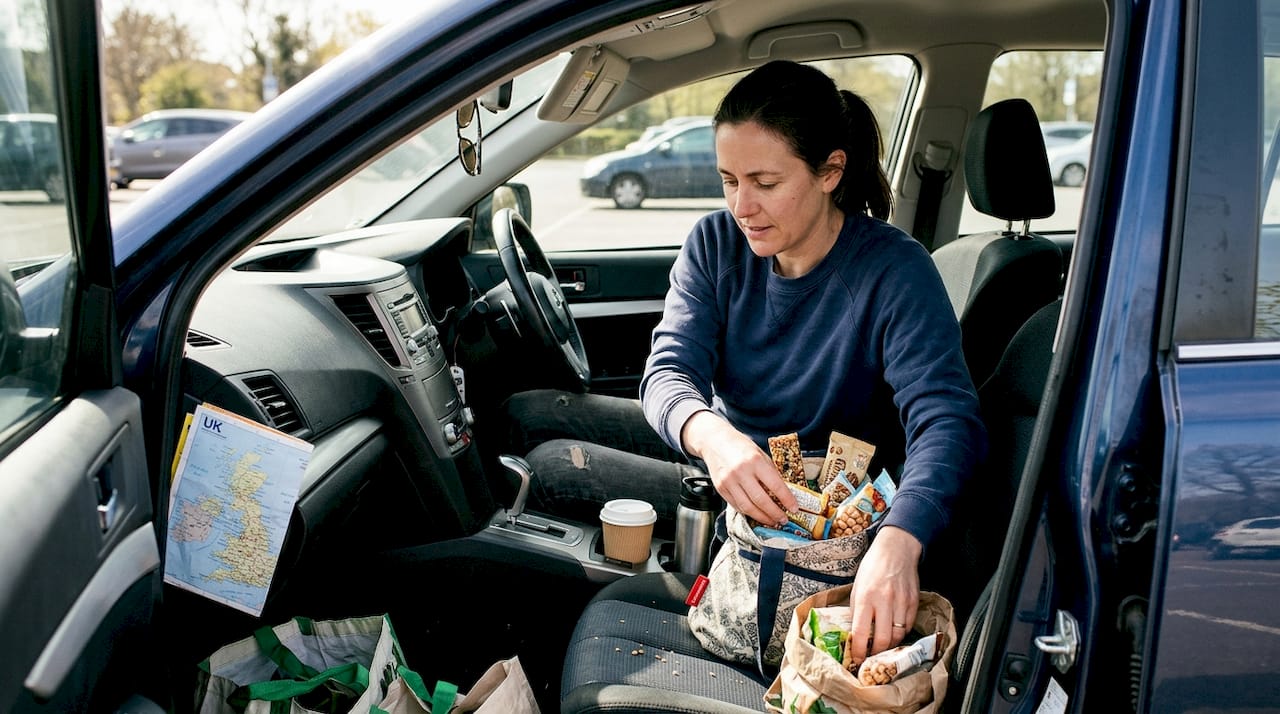
If you experience a breakdown, the safest advice is to stay inside your vehicle with your seatbelt on until help arrives, particularly on high-speed roads. Your reflective triangles should already be placed behind the vehicle before you return to wait.
On the road: Staying safe and attentive behind the wheel
Once on the road, safety and attention require ongoing strategies for every passenger. Long stretches of motorway are particularly deceptive; the monotony lulls you into a passive state faster than you realise. Fatigue, not just sleepiness but cumulative mental and physical strain, is one of the leading factors in serious road accidents.
Recognising the signs of fatigue early is critical. Watch for: difficulty keeping your eyes focused, missing junctions you know well, lane drift, irritability, or yawning repeatedly. These are not minor inconveniences; they are warnings. Visit our guide on recognising travel fatigue if you want a deeper breakdown of the stages.
The consequences of drowsy driving are severe. Fatigue impairs reaction time and decision-making in ways comparable to alcohol. A micro-sleep lasting just four seconds at 100 km/h means your vehicle travels over 110 metres with nobody in control.
| Driver type | Recommended break frequency | Break duration |
|---|---|---|
| Professional lorry driver | Every 4.5 hours (legally required) | At least 45 minutes |
| Long-distance family driver | Every 2 hours | 15 to 20 minutes |
| Solo recreational driver | Every 2 hours | 15 minutes minimum |
For staying comfortable on long drives, adjust your seat and mirrors every few hours, keep the cabin temperature slightly cool, and avoid heavy meals before driving. For families, rotating entertainment every cycle using audiobooks, games, and screens keeps children engaged and prevents the cabin tension that distracts drivers. Plan stops near playgrounds or open spaces where children can run freely.

For professional drivers, sleep hygiene and exercise at stops are critical tools against the cumulative toll of a sedentary profession. Park, walk, stretch, and eat something with nutritional value at every rest opportunity.
Useful safety tools to keep accessible:
- A dash cam, running continuously
- Roadside assistance membership details
- Reflective vest for emergencies outside the vehicle
- A spare fully charged phone or power bank
Well-being on the move: Health, snacks, and mental focus
Physical and mental wellbeing influence every mile driven, so integrate health into your road routine. Research on long-haul drivers consistently shows that prioritising sleep, balanced nutrition, and movement at stops directly counters the physical stress of sustained driving. Studies suggest around 27% of long-haul truck drivers experience depression, a figure that underlines how seriously mental health must be taken on the road.
Follow these steps to build a practical health routine for your journey:
- Plan meals before you leave. Prepare balanced snacks at home rather than relying on service station food. Nuts, fruit, wholegrain crackers, and pre-made wraps are practical choices.
- Avoid heavy, high-fat meals. These trigger a sharp drop in alertness within 30 to 60 minutes of eating. Save the big meal for the end of the day.
- Hydrate consistently. Dehydration contributes to fatigue and reduced concentration. Aim for water rather than sugary drinks or excessive coffee.
- Use every stop for movement. Even five minutes of walking, some shoulder rolls, and a few leg stretches dramatically reduce stiffness and reset your focus.
- Set a mental target for each leg. Breaking the journey into shorter sections with a specific landmark or goal gives your brain a manageable structure, which reduces the mental weight of a very long route.
Pro Tip: Schedule a proper walking break every two hours. Even a ten-minute walk around a service area does more for your alertness than a second cup of coffee. Build it into your timetable rather than treating it as optional.
For guidance on building a consistent routine, our article on staying healthy on the road covers nutrition, sleep, and movement in practical detail. Pairing that with travel routines for focus gives you a framework that works whether you’re driving professionally or for pleasure.
Breaking long-haul myths: What real-world experience teaches
Most advice about long-distance driving focuses on lists. Check this, pack that, stop here. That is useful, but it misses something important: the best journeys rarely go to plan, and the drivers who handle disruption well are not the ones who planned hardest. They’re the ones who planned flexibly.
The idea that sheer endurance is what gets you through a long drive is one of the most persistent and damaging myths on the road. Pushing through fatigue is not toughness; it is a decision that puts you and everyone around you at risk. Experience teaches you to stop before you need to, not after. The real driver stories shared by professional drivers and families alike point to the same hard lesson: rigidity is the enemy of a good journey.
“The road changes. Traffic, weather, the mood of the cab. You have to be willing to scrap the schedule and make a new one.” A seasoned long-haul driver.
Mental health is still almost entirely absent from mainstream driving guides. The isolation, disrupted sleep, and physical monotony of professional driving in particular creates a genuine wellbeing challenge that no snack bag or playlist fully solves. Acknowledging that, and building in genuine rest and human connection where possible, is not softness. It is strategy.
Pro Tip: At the start of each day’s drive, name your stop points out loud or write them down. Committing to rest creates accountability, and accountability is what keeps you honest when fatigue starts telling you that you’re fine.
Equip your journey with smarter safety solutions
Every long drive carries risk, and the right gear narrows that gap between a close call and a safe outcome. At Convoy, we’ve spent over three decades understanding what drivers genuinely need on the road, from the practical to the protective.

For visibility and security at every stop, our reflective safety harness keeps you seen in low-light conditions when you’re outside your vehicle. If you’re travelling with gear, bikes, or cargo, the cargo and bicycle alarm offers straightforward, reliable protection. Everything we stock is chosen with working drivers and travelling families in mind. Explore our full range to find what your next journey is missing.
Frequently asked questions
What is the most important check before a long trip?
Ensure your tyres, brakes, fluids, and lights are inspected, as a thorough pre-trip inspection of these systems is essential for safety and performance on any extended drive.
What emergency items should I always keep in the car?
Pack a torch, reflective triangles, flares, water, first-aid kit, and a warm blanket; the right emergency kit ensures you’re covered for most roadside situations.
How often should I take breaks when driving long distances?
Aim to stop every two hours or 160 kilometres to stay alert; for families, planned stops at parks or open spaces make the break worthwhile for children too.
What are the best ways to keep children entertained on road trips?
Rotate audiobooks, games, and screens every 30 minutes to maintain engagement and prevent the restlessness that unsettles the whole cabin.
How can professional drivers maintain their health on the road?
Prioritise consistent sleep schedules, use every stop for movement, and choose balanced meals; sleep and exercise at stops are the most effective tools against the physical toll of long-haul driving.