

Most travellers think packing is simply a matter of fitting everything into a bag. It is not. The difference between a chaotic, stressful trip and a smooth, enjoyable journey often comes down to how thoughtfully you organise your essentials before you leave. Packing cubes and modular systems can reduce packing stress by 80%, save over three hours per trip, and eliminate forgotten items entirely. Whether you are a solo road tripper, a family of five, or a frequent flyer, the way you organise your bag shapes your entire travel experience from the moment you zip it shut.
Table of Contents
- The real cost of disorganised travel
- How organisation transforms your travel experience
- Practical systems: Packing cubes, kits, and colour codes
- Organisation for different journeys: Flights, road trips, and more
- A fresh perspective: Why the details matter more than you think
- Explore more resources for stress-free travel
- Frequently asked questions
Key Takeaways
| Point | Details |
|---|---|
| Reduce packing stress | Systematic organisation cuts packing anxiety by up to 80 percent. |
| Save hours every trip | Efficient packing systems reclaim three or more hours every journey. |
| Eliminate forgotten essentials | Modular kits and checklists ensure nothing important is left behind. |
| Build family responsibility | Colour-coded packing and involvement teach children valuable habits. |
| Customise for journey type | Organisation strategies adapt easily for flights, road trips, or train travel. |
The real cost of disorganised travel
Disorganised packing is one of those problems that feels minor until it is not. You arrive at the airport and cannot find your passport. Your child’s favourite toy is buried under three jumpers. The paracetamol you definitely packed is nowhere to be found at midnight in an unfamiliar hotel room. These are not rare occurrences. They are the predictable result of packing without a system.
The hidden costs add up quickly. Consider what poor organisation actually costs you:
- Time lost rummaging through bags at security, in the car, or at check-in
- Money wasted replacing forgotten items at inflated airport or motorway service prices
- Stress accumulated before the journey even begins, affecting your mood and energy
- Arguments triggered when families cannot locate shared essentials under pressure
- Safety risks when first aid or emergency items are not accessible when needed
Families report this most acutely. A parent of three described their pre-trip routine as “controlled chaos” until they adopted a modular system. Within two trips, they stopped forgetting items altogether. The shift was not about buying more gear. It was about creating a repeatable structure.
“The single biggest travel mistake families make is repacking from scratch every trip. A permanent system means you never start from zero.”
Research backs this up. Modular packing systems reduce stress by 80%, save three or more hours per trip, and eliminate the forgotten-item problem that plagues most travellers. That is not a marginal improvement. That is a transformation.
If you are serious about planning a smoother journey, the first step is acknowledging that disorganisation has a real cost. The second step is doing something about it. Practical packing tips for long journeys can help you build that foundation, but the mindset shift comes first.
How organisation transforms your travel experience
Once you accept that packing is a system rather than a chore, the benefits become obvious and measurable. Organised travellers spend less time searching, less money replacing forgotten items, and less energy managing avoidable stress. They arrive calmer and enjoy the journey more.
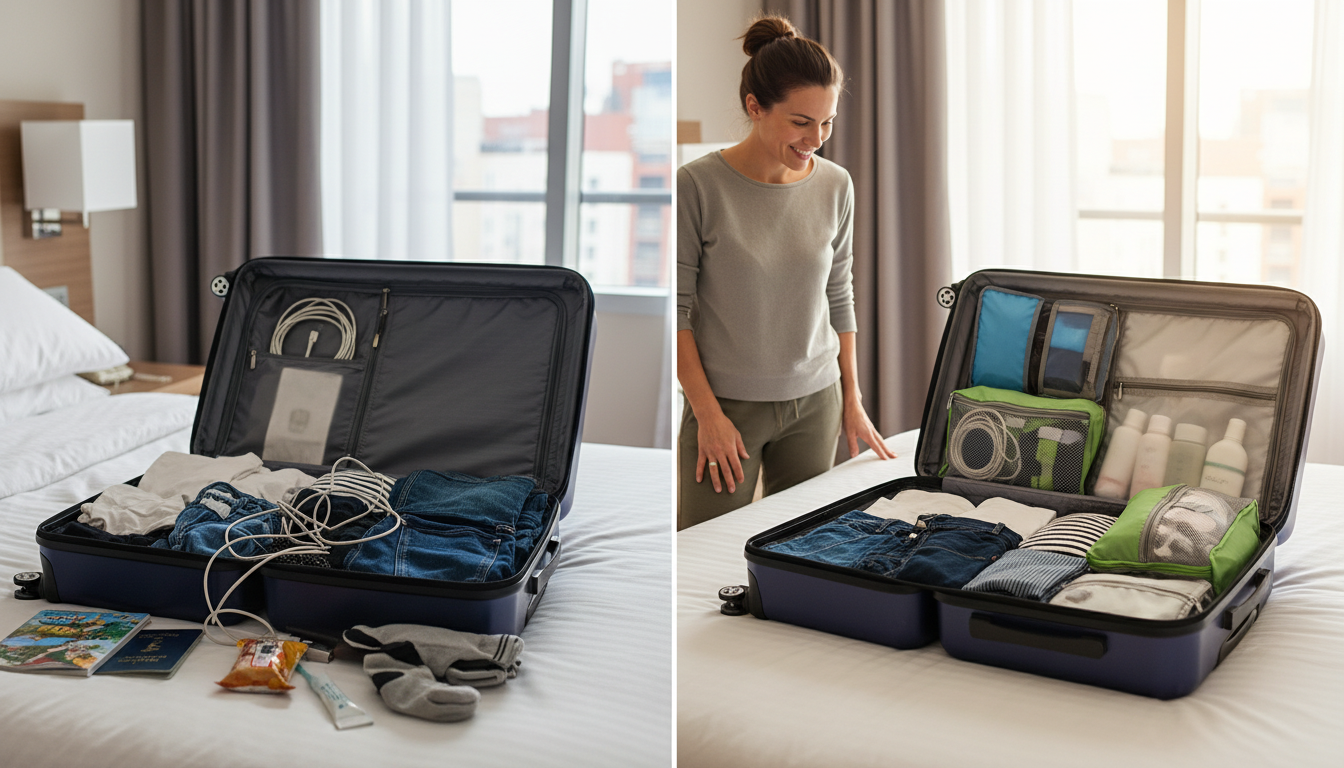
The contrast between a stuffed suitcase and a systematic approach is stark:
| Feature | Stuffed suitcase | Systematic packing |
|---|---|---|
| Time to pack | 60 to 90 minutes | 20 to 30 minutes |
| Items forgotten | Frequent | Rare to never |
| Stress level | High | Low |
| Repacking needed | Often | Almost never |
| Child involvement | Difficult | Easy and engaging |
| Security checks | Slow and stressful | Quick and calm |
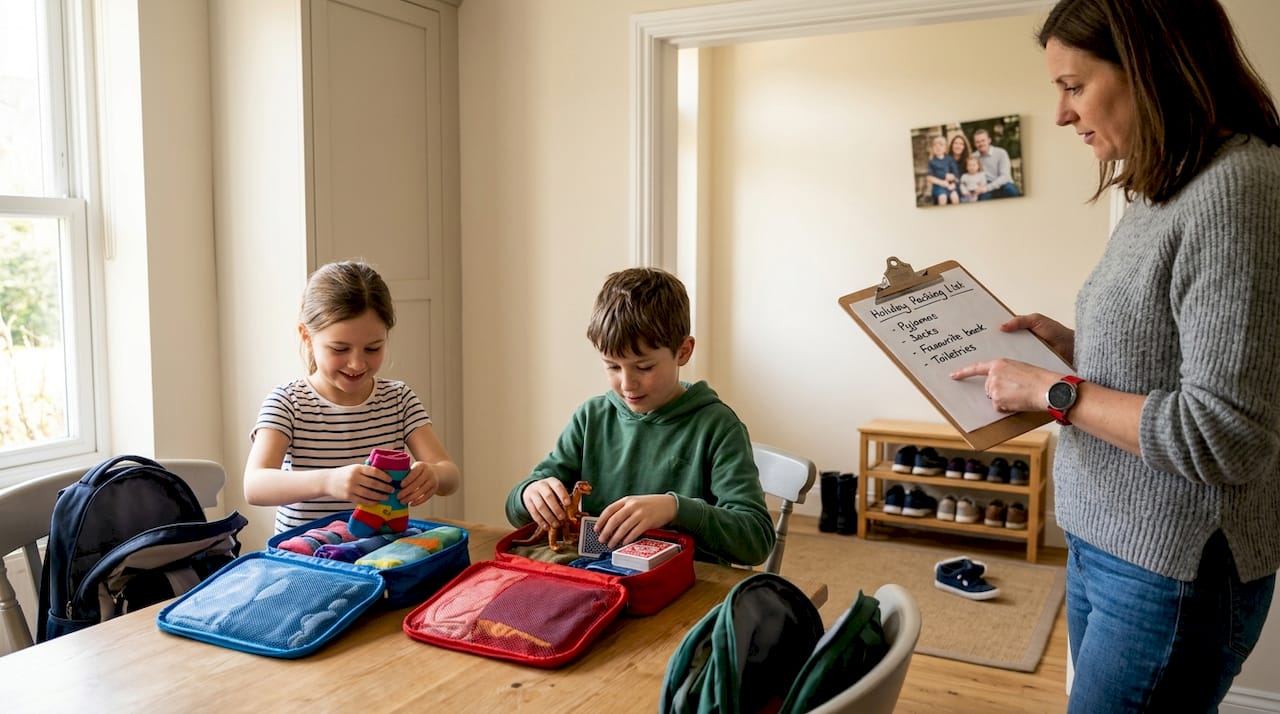
Colour-coded packing cubes are one of the most effective tools available. Assign a colour per person or category. Blue for toiletries, green for children’s clothing, red for snacks and entertainment. The visual system means anyone in the family can locate what they need without unpacking everything else.
For solo travellers, the gains are equally significant. Essential travel accessories such as compression cubes, cable organisers, and document wallets turn a chaotic bag into a portable, logical system. You stop wasting mental energy remembering where things are.
Using packing tips for comfort alongside a modular system means your physical comfort and your organisational efficiency reinforce each other. Organised packing reduces stress by 80% and saves three or more hours per trip, which translates directly into more enjoyment and less exhaustion on arrival.
Pro Tip: Pack your most-needed items, such as snacks, medications, and entertainment, in the outermost pocket of your bag. You will access them dozens of times without disturbing the rest of your system.
Practical systems: Packing cubes, kits, and colour codes
Knowing the benefits is one thing. Building the system is another. Here is a step-by-step approach that works for families and individuals alike.
- Audit your essentials. List every category you need: clothing, toiletries, health, documents, entertainment, snacks, and safety items.
- Assign a cube or pouch to each category. Choose colours deliberately so each person or category is immediately identifiable.
- Build core kits. A health kit, a documents kit, and a snacks kit should be pre-packed and ready to grab for any trip.
- Create age-based modules for children. Younger children need nappy and feeding kits. Older children can manage their own entertainment and clothing cubes.
- Involve your children. Let them pack their own cube. It builds responsibility and reduces the burden on parents.
- Review and restock after every trip. Spend ten minutes restocking your core kits so they are ready for the next journey.
Here is a practical overview of kit components for a family of four:
| Kit | Contents | Who manages it |
|---|---|---|
| Health kit | Plasters, paracetamol, antihistamine, thermometer | Parent |
| Documents kit | Passports, insurance, booking confirmations | Parent |
| Child cube (per child) | Clothing, small toy, comfort item | Child (supervised) |
| Snacks kit | Portioned snacks, drinks, utensils | Shared |
| Entertainment kit | Tablet, headphones, books, games | Child (older) |
| Safety kit | Torch, high-vis vest, emergency contact card | Parent |
Colour-coded cubes per child reduce parental burnout and build genuine responsibility in children from a young age. It is one of those changes that feels small but delivers outsized results.
For more tailored advice, explore packing smart with kids and check out what road trip gear you might be missing from your safety kit.
Pro Tip: Use a clear, zippered pouch for your documents kit. Being able to see everything at a glance at border control or check-in saves minutes and prevents panic.
Organisation for different journeys: Flights, road trips, and more
A system that works brilliantly for a road trip may need adjusting for a flight or a train journey. The core principles remain the same, but the priorities shift depending on your mode of travel.
For flights:
- Keep your documents kit and valuables in your personal item bag, not the hold luggage
- Pack a compact carry-on kit with a change of clothes, medications, and entertainment in case of delays
- Use compression cubes to maximise space and meet airline size restrictions
- Place liquids in a clear bag at the top of your carry-on for fast security screening
- Consider a small neck wallet for passports and boarding passes
For road trips:
- Use a car organiser or boot tray to keep bags accessible without sliding around
- Pack a dedicated car kit with snacks, wipes, a first aid kit, and a high-vis safety vest for roadside emergencies
- Keep entertainment and comfort items within reach of children’s seats
- Rotate snacks and activities every hour or two to maintain energy and focus
For train journeys:
- Prioritise lightweight bags with external pockets for tickets and cards
- Pack entertainment and snacks in a top-loading daypack for easy access at your seat
- Keep your health kit accessible, especially on longer routes
Colour-coded cubes and child involvement reduce parental burnout regardless of journey type. The system adapts; the principle does not.
For families flying with children, detailed guidance on making air travel easier covers everything from seat selection to managing meltdowns. And for those planning longer drives, the guide on road trips with children is an essential read.
Pro Tip: Build a universal “grab bag” with your most critical items that moves between your car, carry-on, and hotel room. You will never leave a hotel without your essentials again.
A fresh perspective: Why the details matter more than you think
Most travel guides focus on what to pack. Very few focus on how the act of organising changes the experience itself. Here is what years of observing travellers and road-goers has taught us: the emotional benefit of an organised bag is just as significant as the practical one.
When you know exactly where everything is, you travel with a quiet confidence. You are not bracing for the moment something goes wrong. You are free to be present, to enjoy the journey, to engage with your children or your companions rather than managing logistics in your head.
The details most guides miss are the small ones. A missing charging cable at 10pm. A child’s comfort item left in the car. A forgotten prescription. These are not catastrophic events, but they erode the quality of a trip in ways that are hard to articulate. Disciplined organisation prevents them.
We believe that calm travel preparation is not about being rigid or over-prepared. It is about creating enough structure that you have room to be spontaneous. The system handles the logistics so you can handle the moments that matter.
Explore more resources for stress-free travel
Organising your travel essentials is the foundation of every great journey. At Convoy, we have spent decades helping travellers, families, and road professionals find practical solutions that make every trip smoother, safer, and more enjoyable.
From safety essentials like our high visibility safety vest, which belongs in every car kit, to travel-themed gifts like the beloved plush IFA truck that keeps young travellers entertained, we stock gear chosen with real journeys in mind. Browse our full range of travel guides and products at convoy.eu and take the next step towards a genuinely stress-free travel experience.
Frequently asked questions
What are packing cubes and why do they matter?
Packing cubes are zippered fabric pouches used to separate and organise items inside a bag. Packing cubes reduce packing stress by 80%, save over three hours per trip, and eliminate forgotten items.
How can I involve children in organising travel essentials?
Assign each child a colour-coded cube and let them pack it themselves under supervision. Involving kids in packing builds responsibility and significantly reduces parental burnout across the trip.
What is the fastest way to organise for road trips?
Build pre-packed modular core kits for health, snacks, and safety items that are ready to grab for any trip. Modular packing systems eliminate forgotten items and reduce the time spent repacking from scratch.
Does organising travel essentials really save time?
Yes, consistently. Packing cubes and systems save at least three hours per trip by eliminating repacking, reducing search time, and speeding up security checks.
Are there different systems for flights versus road trips?
Absolutely. Flights require compact carry-on kits and accessible liquids, while road trips benefit from modular boot organisers and a dedicated safety kit. The core system stays the same; the priorities shift by journey type.