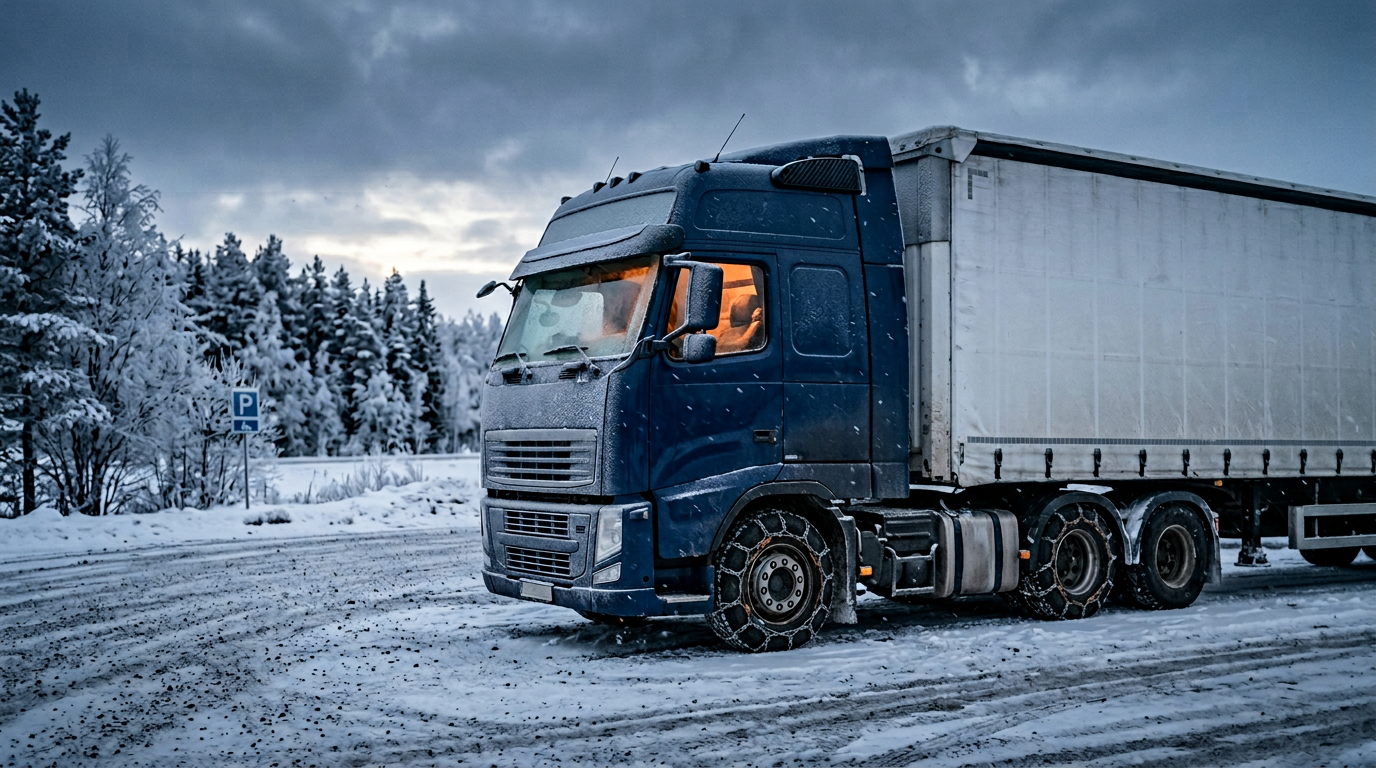
When harsh weather arrives: everything you need to know about using snow chains and traction aids!
It often happens that icy, snowy weather arrives overnight. However, transport is a profession that cannot stop because of this. Whether it’s a van or a truck, a good driver can reach the destination precisely, on time, and safely, even when facing the elements. Accessories such as snow chains and traction aids can be extremely helpful in harsh weather conditions. In fact, in some cases—such as border crossings and international transport—the use of snow chains may even be mandatory.
In this article, we will explain the difference between snow chains and traction aids, how to choose the best quality and most efficient option, and which countries you should never cross without having snow chains with you.

Why are snow chains an essential accessory?
Snow chains are chains mounted on tires that improve traction in winter road conditions, such as snowy or icy roads. They are not only important for starting and driving but also help with braking and stopping.
It can be useful to keep snow chains in your vehicle all year round, as they can also help on dirt roads or in deep mud where you might otherwise get stuck. However, it is important to know that snow chains should never be used on snow-free surfaces. Even driving a few kilometers on asphalt can completely damage both the chains and the tires. Not to mention that unnecessary use can also damage the road surface.
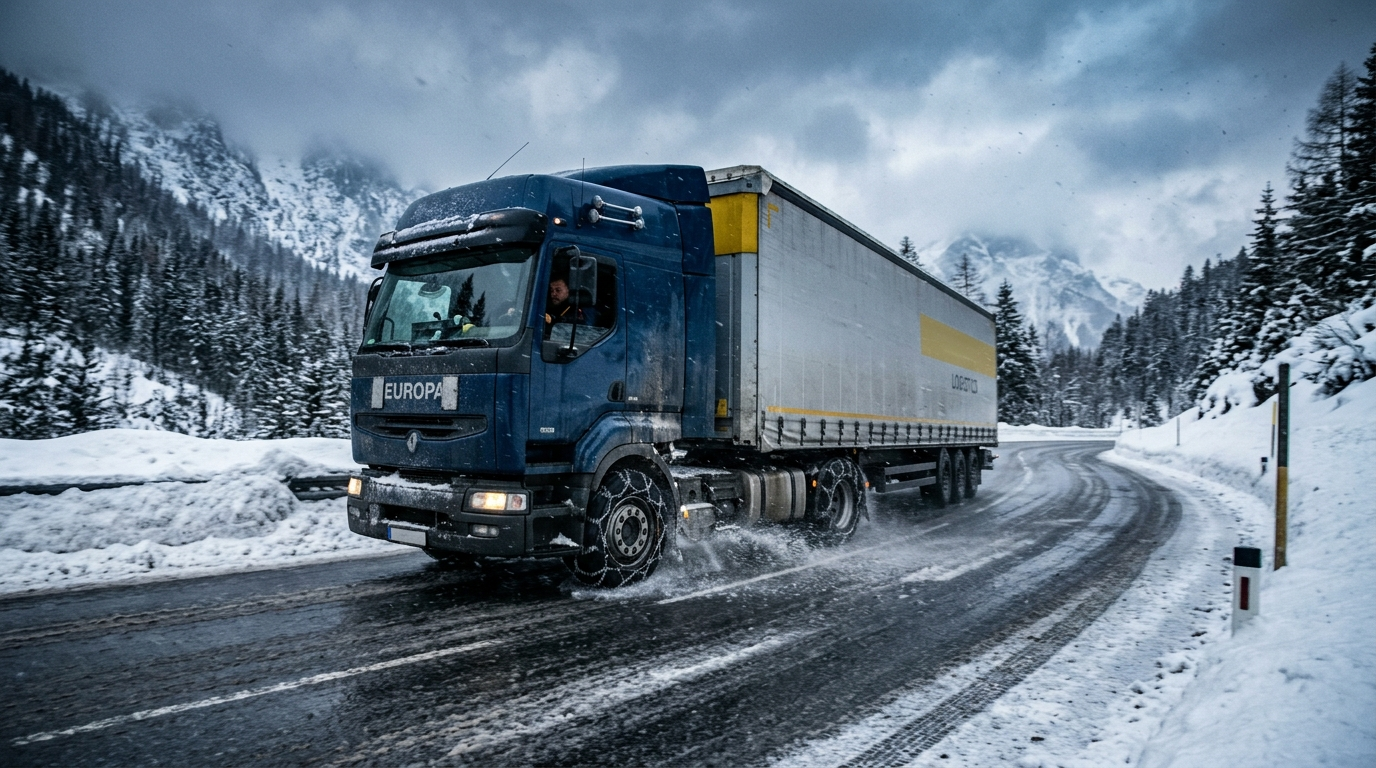
What types of snow chains should you choose?
There can be significant differences between snow chains, especially in terms of materials. Different types vary in traction, durability, tire protection, and the level of noise they produce while driving.
You can choose traditional steel snow chains or opt for increasingly popular textile snow chains. The latter are also known as snow socks or snow covers. Textile chains take up less space and are generally easier to install. However, they are not recommended for steep inclines, especially for larger vehicles.
Classic snow chains are made of steel links and can have ladder, diamond, or trapezoid patterns. Ladder-pattern chains are less recommended, as the wheel may stop in a position where the chain does not touch the ground, reducing effectiveness. Trapezoid-pattern chains, on the other hand, ensure that the chain is always between the tire and the road, making them a more efficient and safer solution when conditions require their use.
Traditional snow chains are available with manual or automatic tensioning systems. Manual versions require some physical effort to tighten after installation, while automatic ones adjust themselves, making installation easier.
It is also worth mentioning liquid snow chain spray, designed for winter, wet, snowy, or icy conditions. It creates a resin-like layer on the tire surface, helping to overcome temporary slippery obstacles. It gradually wears off after about 15–20 kilometers without damaging the tire. However, it is important to note that while useful in certain situations, it cannot replace snow chains where their use is legally required.
Snow chains vs. traction aids: what’s the difference?
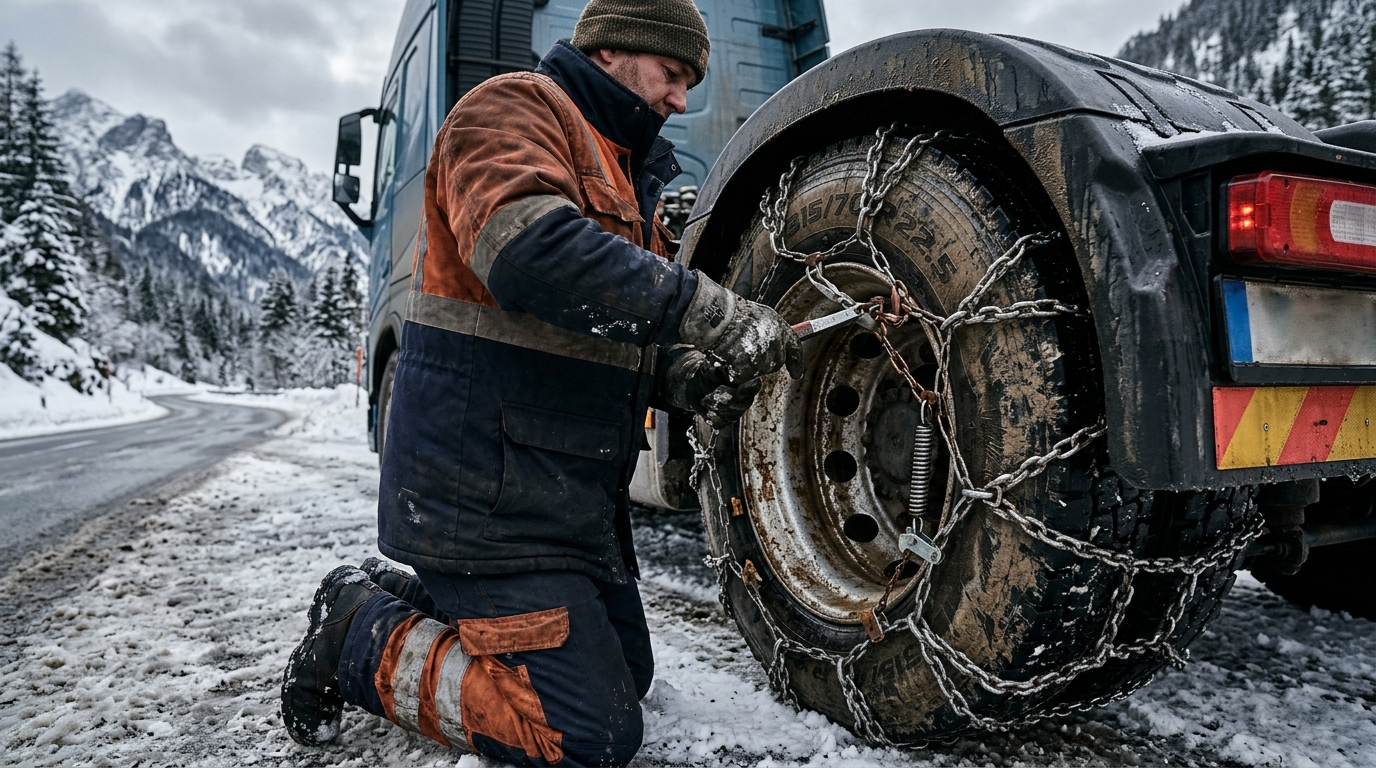
A traction aid chain is mainly used for trucks and is designed to help the vehicle start moving. However, it is not suitable for continuous driving. Therefore, traction aids cannot replace snow chains. That said, they can be kept in the truck alongside snow chains, as they can be quicker and easier to use when starting on icy or snowy roads.
To ensure safe movement, 3 traction aids per driven wheel are required. This means you should have at least 6 pieces available. Using fewer will result in minimal effectiveness.
Important things to know before buying snow chains
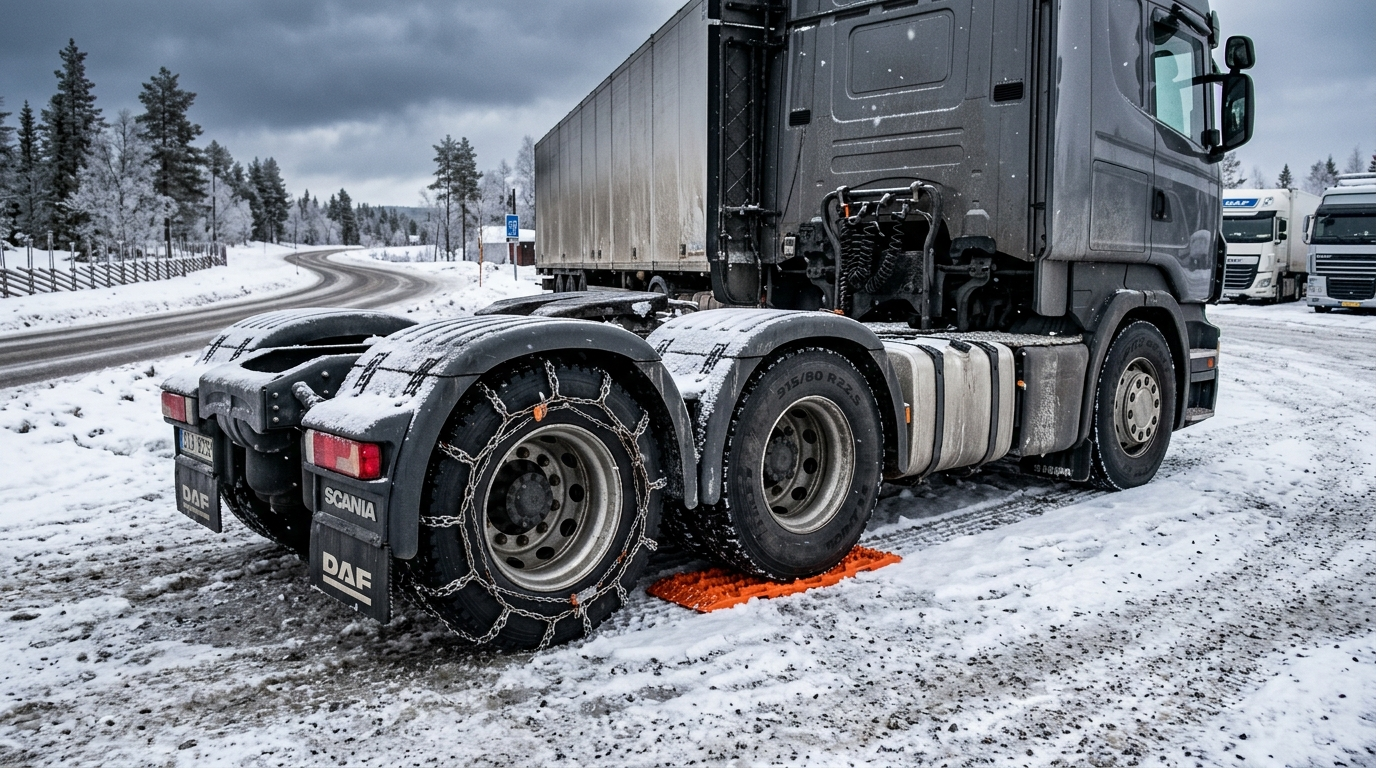
Wheel size: Choosing the correct size is crucial. Many believe snow chains are universal, but this is not true.
Different tire sizes require different chain sizes. If the chain is too tight, it cannot be installed; if too loose, it will be ineffective and may even break after a short distance. Therefore, always check your exact tire size before purchasing.
Quantity: A common question is how many chains are needed. Typically, snow chains are installed only on the driven wheels, meaning you don’t need chains for every wheel.
Vehicle type: Never use passenger car snow chains on commercial vehicles. Always choose heavy-duty chains designed for trucks and commercial use.
Usage duration: Snow chains and traction aids do not have an expiration date. With proper maintenance, they can last for years, even with frequent use.
Don’t let price or brand decide: Always check for quality certifications. In many Western European countries, only certified chains are permitted, so choosing a certified product is essential.
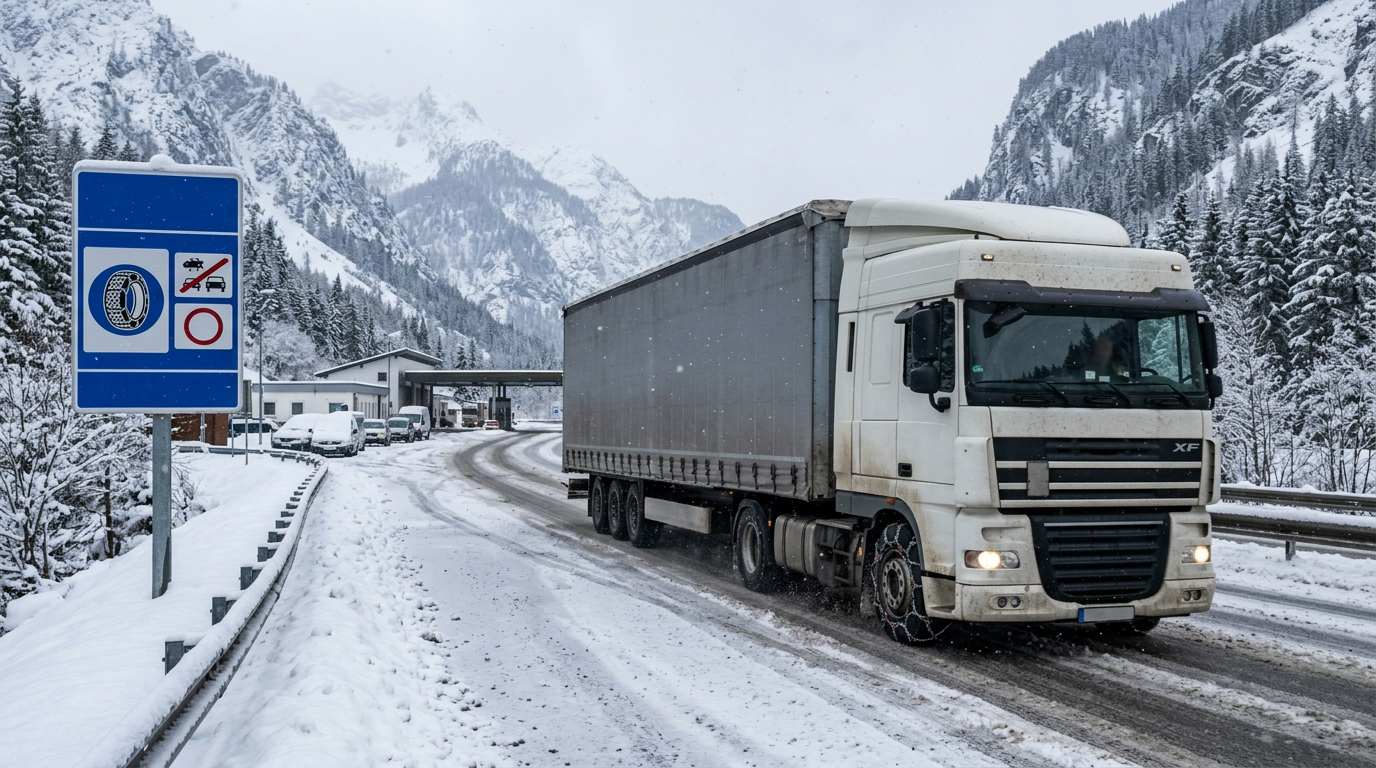
What rules apply to snow chains domestically and abroad?
Regulations vary by country. In some places, snow chains must be carried depending on weather or season, and in others, they are mandatory year-round.
Hungary: Snow chains are not mandatory, but road authorities may require them on certain sections.
Austria: Between November 1 and April 15, winter tires or snow chains are required under certain conditions. Fines can range from €35 to €5000.
Slovenia: Snow chains are mandatory if snow exceeds 5 cm, and checks may occur at the border.
Serbia and Ukraine: Snow chains or winter tires are required depending on conditions between November 1 and April 1.
Croatia: Chains must be carried in winter conditions, and in some regions, their use is mandatory.
Czech Republic: Winter tires are required in marked areas, and snow chains must be carried.
Slovakia and Romania: Snow chains are not always mandatory, but winter tires are required under certain conditions.
Germany: No general obligation, but signage may require their use.
When traveling abroad, always ensure that certification labels and documentation are available and readable to avoid fines.

Snow chain certifications
The most widely accepted certification is GS/TÜV. Chains that pass testing receive the GS (Geprüfte Sicherheit) mark, meaning “tested safety.”
Another strict standard is the Austrian ÖNORM V5117 (cars) and V5119 (trucks). Chains with these certifications are considered high quality regardless of brand.
How to properly install snow chains
Installing snow chains is straightforward if you follow the steps. Some physical effort may be required, but automatic tensioning systems can make the process easier.
If installing during a trip, pull over safely on a flat surface, engage the handbrake, and use hazard lights. Wear a reflective vest, place the chain in front of the driven wheel, and install it carefully.
After installation, drive 20–30 meters and check the chain tension. If loose, tighten it properly.
Always follow the manufacturer’s instructions and consider practicing installation in normal conditions before needing it in extreme weather.
After use, always clean the chains to prevent rust and ensure long-term reliability.
The best quality snow chains and traction aids
In the convoy.hu selection, truck and commercial vehicle drivers can find snow chains and traction aids for various wheel sizes, all in top quality with the necessary certifications, along with useful accessories for easier installation.