

See and be seen: everything you need to know about using warning beacons
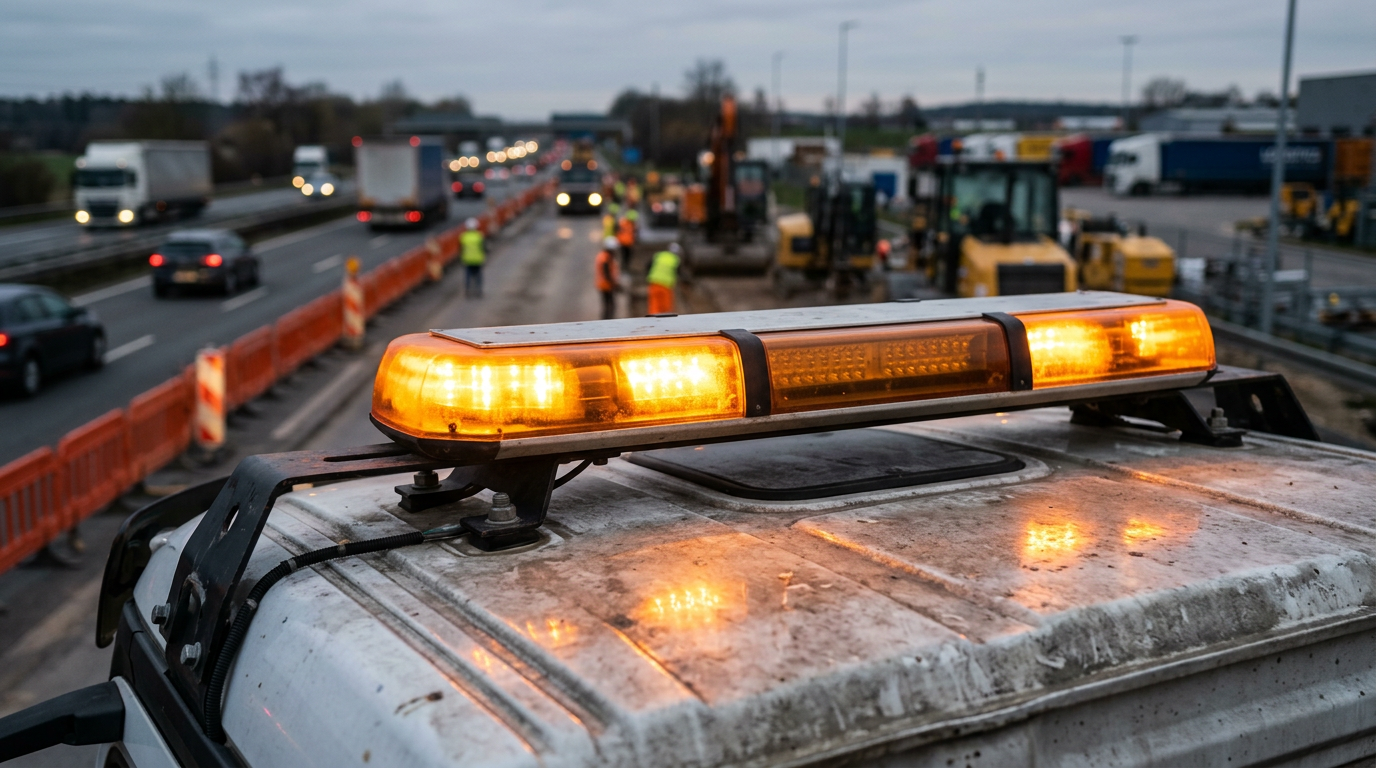
In transportation, construction, and many other fields, it is essential for a vehicle to be clearly visible. This is supported by distinctive and warning signals such as beacons, whose purpose is to alert drivers that in certain situations the vehicle may have priority.
But what rules apply to the use of beacons? Who is allowed to use, for example, a yellow warning beacon on their vehicle, and for what purpose? And if we want to use a compliant beacon, which type should we choose?
In this article, we have gathered the key information you need to know about beacons used in road traffic.

Distinctive vs. warning signals: the key differences
There are several types of beacons used on vehicles. Based on their color, we distinguish between distinctive signals and warning signals. The former category includes blue and red beacons, while the latter refers to yellow beacons.
Blue and red distinctive signals are typically used by emergency services, authorities, and government vehicles. According to the law, vehicles equipped with these signals—such as ambulances or police—may be exempt from certain traffic rules when using both light and sound signals in specific situations.
Accordingly, blue and red signals are used exclusively for responding to threats to human life, physical safety, health, property, or the environment, fulfilling international obligations, damage control, national defense, national security, public safety, or other tasks of significant state interest.
The role of yellow warning beacons is different. They do not grant priority but serve as a warning signal. They indicate that the vehicle using the flashing yellow light should be approached, passed, or overtaken with increased caution. This is why yellow beacons are commonly seen on construction machinery and transport vehicles.
It is important to note that warning signals refer exclusively to amber-colored light. Other colors (such as pure white or green) are not recognized by law in this category.

Halogen or LED? Which beacon should you choose?
Beacons can differ not only in their application but also in their technology. You can choose between traditional halogen and LED beacons. The former are becoming less common, as halogen beacons are less energy-efficient.
In contrast, LED technology offers high reliability, long lifespan, and low power consumption. LED brightness exceeds 70% of the original intensity and can provide up to 50 times longer lifespan compared to traditional halogen beacons.
Therefore, depending on your needs, it is worth choosing LED beacons, as they save energy and money while offering a reliable long-term solution.

Who can use a yellow beacon in Hungary?
Although anyone can purchase a yellow beacon, not everyone is allowed to use it. Installation on a vehicle is regulated by the 12/2007. (III. 13.) IRM decree, in force since 2007.
According to the regulation, one group includes vehicles that can use yellow warning beacons without special permission. This group includes road construction vehicles, waste collection vehicles, agricultural machinery, oversized vehicles, transport authority inspection vehicles, civil patrol services, and similar operations.
As the list is quite extensive, it is recommended to carefully review the 12/2007. (III. 13.) IRM decree before purchasing a beacon.
Another group includes vehicles that may also use yellow beacons but require special authorization. This includes, for example:
- vehicles transporting radioactive materials,
- escort vehicles for oversized loads,
- vehicles performing regular towing or roadside assistance,
- vehicles used for official vehicle removal or wheel clamp enforcement,
- vehicles used for transporting cash and valuables,
- vehicles transporting security documents under contract.
Those requiring authorization must submit an application to the relevant authority using the RI-0300 form via the official electronic system.
Authorities may revoke previously granted permissions if the conditions justifying their use change, or if the operator no longer meets the requirements.
If the beacon is used improperly, authorities may require its removal from the vehicle.

What types of beacons can you choose from?
When selecting the right beacon, two main factors should be considered: the flashing mode and the mounting type.
There are several mounting options. Among roof beacons, magnetic base models are the most popular, typically powered via a cigarette lighter socket.
You can also choose permanently mounted beacons with screw fixation, or DIN-standard pole-mounted versions connected to the vehicle’s electrical system. In addition, light bars and auxiliary warning lights are also available.
Beacons also differ in their flashing patterns. Options include flashing, strobe-like, or rotating effects that simulate a traditional rotating beacon. Some models—especially blue emergency beacons—allow users to select the flashing mode, making them suitable for use in different countries with varying standards.

Standards and markings: which beacons are allowed?
It is also important to consider standards and markings to ensure compliance with regulations.
In Europe, mandatory requirements for vehicle lighting and signaling devices are defined by UNECE (United Nations Economic Commission for Europe) regulations and national laws based on them. In Hungary, ECE regulations are the authoritative standard.
Therefore, whether purchasing a distinctive or warning beacon, always choose a product marked with the "E" certification, which confirms it is approved for road use.
However, the E-mark alone does not grant permission for use. The vehicle and its intended purpose must comply with the previously mentioned legal regulations.
Additionally, yellow warning lights must have ECE R65 certification, which defines their photometric performance. This marking must be clearly and permanently displayed on the beacon housing.
Beacons can be mounted on the roof, dashboard, or windshield, depending on the type. However, it is essential that yellow warning lights are visible from all sides of the vehicle, and that at least one beacon or a light bar is installed at the highest point of the vehicle.