

Most families assume flying is the smarter choice for holidays with children. In reality, 71% of families chose road trips over airports in 2026, drawn by the freedom, cost savings, and genuine moments that no airline seat can replicate. Road travel lets you stop when you want, pack what you need, and turn the journey itself into an adventure worth remembering. This guide walks you through everything from understanding what family road travel actually involves, to planning a budget, keeping children comfortable, and travelling safely. By the end, you will have a clear, practical framework for your next family road journey.
Table of Contents
- What is family road travel?
- Planning a successful family road trip
- Keeping everyone comfortable and entertained
- Safety and sustainability essentials
- Why family road travel matters more than ever
- Gear, safety, and comfort: equip your family for the road
- Frequently asked questions
Key Takeaways
| Point | Details |
|---|---|
| Road trips rising | In 2026, most families prefer the flexibility and value of the road over airports. |
| Careful planning pays | Investing time in itinerary and packing smooths the travel experience and helps manage costs. |
| Comfort is key | Combining routines, games, and safety gear ensures an enjoyable trip for all ages. |
| Safety and savings | Hybrid vehicles and reflective equipment support both sustainability and well-being on the road. |
What is family road travel?
Family road travel means setting off by car, campervan, or motorhome with children in tow, using the road as both your route and your experience. It is not simply a commute stretched over several days. It is a deliberately chosen form of travel where the drive itself holds value, not just the destination. Think of it as the difference between teleporting somewhere and actually walking through the landscape.
As drivers as travellers understand well, being on the road creates a particular kind of awareness. You notice geography, local culture, and the rhythm of different regions in a way that flying completely erases. For families, this becomes a living classroom.
Some common misconceptions are worth clearing up straight away:
- Road trips are exhausting and stressful for children. In fact, children often adapt remarkably well when routines and rest stops are built in.
- Road trips are only for families with older children. Babies and toddlers travel by road across Europe every single day without drama.
- It costs less to fly. Budget airlines hide fees, and the cost of transfers, airport food, and checked luggage adds up fast.
- You need a large vehicle. A well-organised family saloon works perfectly for most trips.
The financial case for road travel is compelling. A typical family drives around 4,000 miles per year, and a 7-day road trip costs roughly £2,600 to £4,600 depending on accommodation and activities. That figure includes genuine flexibility: you choose when and where to stop, eat, and explore.
“The road gives families something no airport lounge ever could: the chance to experience the journey together, at their own pace, on their own terms.”
Beyond cost, road travel builds educational value into every mile. Children observe changing landscapes, learn to read maps, and develop patience and curiosity. Learning to manage travel fatigue is itself a life skill, and road trips are an ideal, low-stakes environment to practise it. The shared experience of navigating an unexpected detour or finding a brilliant roadside café creates memories that outlast any theme park visit.
Family road travel is, at its core, about choosing connection over convenience.
Planning a successful family road trip
Good planning is what separates a chaotic drive from a genuinely enjoyable journey. Families typically spend 16 to 20 hours planning a one-week road trip, which sounds significant until you consider how much smoother the trip becomes as a result.
Here is a reliable sequence to follow when planning road journeys with children:
- Set your destination and rough route. Choose a primary destination, then identify two or three stops along the way that genuinely interest your children, not just the adults.
- Book accommodation early. Family rooms and campsites fill quickly, especially in summer. Booking six to eight weeks ahead gives you the best choice and price.
- Build your itinerary loosely. Assign a daily distance target (typically 200 to 300 miles with children) but leave the afternoon schedule open for spontaneous stops.
- Pack strategically. Use a checklist to cover safety gear, snacks, entertainment, clothing layers, and a basic first-aid kit. The full packing tip guide is a genuinely useful reference here.
- Prepare for emergencies. Keep breakdown cover details, a spare tyre, and a charged power bank accessible at all times.
| Planning area | Recommended action | Estimated time |
|---|---|---|
| Route and stops | Map out primary and secondary routes | 3 to 4 hours |
| Accommodation | Book family rooms or campsites | 2 to 3 hours |
| Packing | Create and check a gear list | 4 to 5 hours |
| Budget | Set daily spend limits | 1 to 2 hours |
| Emergency prep | Arrange breakdown cover and kit | 1 hour |
Pro Tip: Choosing a hybrid or electric vehicle for your trip can noticeably reduce fuel costs, especially on motorways. If your own car is petrol-heavy, comparing short-term hire options before booking could save you a meaningful amount over seven days.
Budget discipline matters too. Set a daily spending limit for fuel, food, and activities, and track it loosely with a notes app. Most families overspend on meals out simply because they do not plan one or two self-catered picnic days into the schedule.
Keeping everyone comfortable and entertained
Even the best-planned itinerary falls apart if children are miserable in the back seat by lunchtime. Comfort and engagement are not optional extras; they are the engine that keeps a road trip enjoyable for everyone.
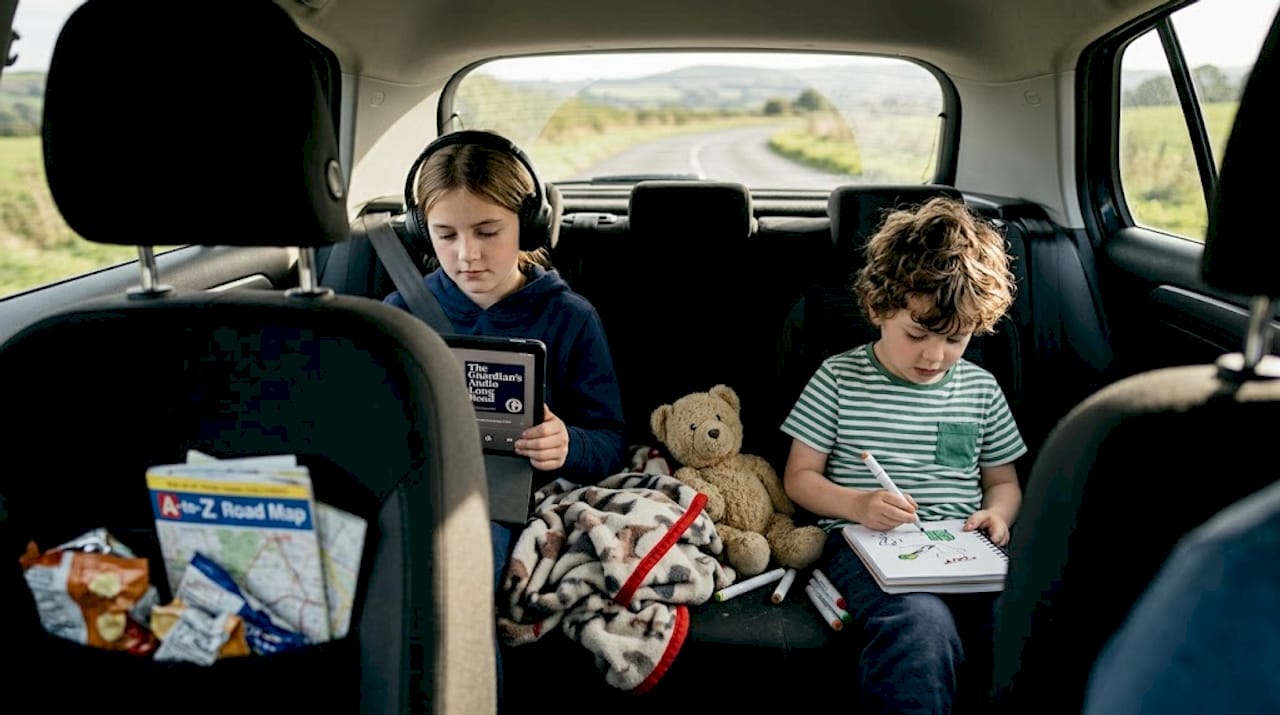
Families that combine structure with flexibility consistently report the most positive road travel experiences. Structure means predictable rest stops every 90 minutes to two hours. Flexibility means not panicking when a toddler needs an unscheduled stop near a field with interesting-looking cows.
For in-car comfort, consider the following:
- Seat comfort: Invest in a quality booster cushion or travel pillow for each child. Long drives in poorly supported seats cause real discomfort.
- Temperature control: Pack a lightweight blanket for each child. Cars heat and cool unevenly, and small passengers are particularly sensitive.
- Snacks: Avoid high-sugar snacks that spike energy and cause crashes. Opt for fruit, cheese, and crackers for sustained energy without the drama.
- Audiobooks and podcasts: Stories keep minds occupied far longer than screen time. Platforms like Audible have extensive children’s libraries that make 200-mile stretches genuinely enjoyable.
- Travel games: Classics like I Spy, the licence plate alphabet game, and storytelling rounds cost nothing and work for almost every age group.
Pro Tip: Download two or three audiobooks and a playlist of favourite family podcasts before you leave. Mobile signal is unreliable on rural routes, and buffering mid-story is a surprisingly reliable cause of backseat frustration.
For detailed advice on managing different ages and personalities in the car, the guide on road trip comfort and patience is worth reading before you depart. And for perspective on why these shared journeys matter so deeply, the piece on building family memories puts it beautifully.
The key insight is this: children do not need constant entertainment. They need engagement at the right moments, and genuine downtime in between.
Safety and sustainability essentials
Safety on a family road trip is not about being cautious to the point of paralysis. It is about making deliberate choices that protect your family without turning every stop into a risk assessment exercise.
Start with the basics every driver should address before a long trip:
- Check tyre pressure and tread depth before departure.
- Confirm your breakdown cover is active and that all contact numbers are saved.
- Carry a high-visibility vest for every passenger, including children.
- Pack a reflective warning triangle and a basic first-aid kit.
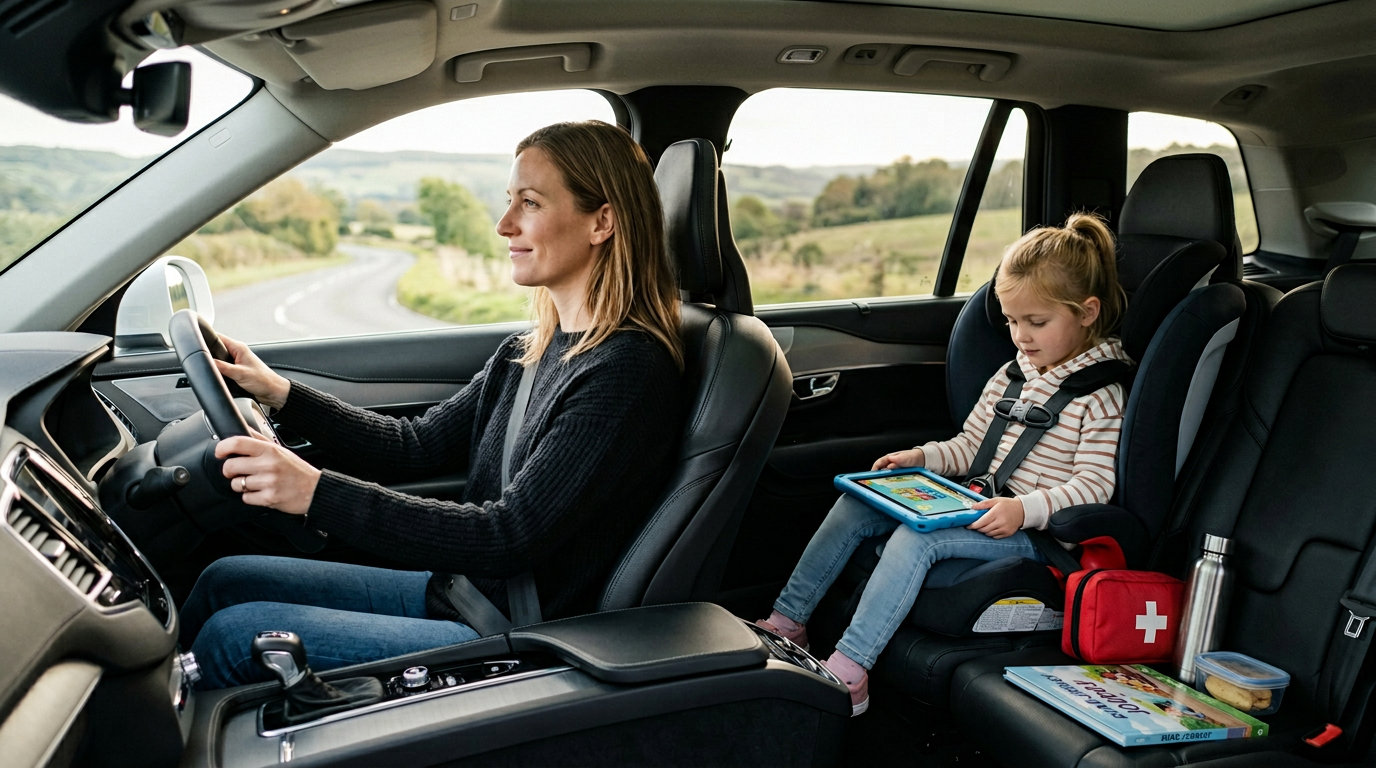
- Ensure all child car seats are correctly fitted and appropriate for each child’s weight and height.
Visit the full road trip safety checklist to make sure nothing critical is missed.
On sustainability, the numbers are worth knowing. Hybrid vehicles save an average of £40 to £50 per 1,000 miles compared to petrol cars. For a 1,500-mile round trip, that is a meaningful saving that also reduces your family’s environmental footprint.
| Vehicle type | Estimated fuel cost per 1,000 miles | CO2 output |
|---|---|---|
| Petrol | £120 to £150 | High |
| Hybrid | £70 to £110 | Medium |
| Electric | £30 to £50 | Low |
Beyond vehicle choice, small habits make a real difference. Drive at a steady speed rather than accelerating and braking sharply, which improves fuel efficiency by up to 15%. Pack reusable water bottles and food containers to reduce plastic waste at service stations. Choose pit stops at local cafés rather than motorway chains, which supports local economies and usually produces better food.
For a broader look at how family travel habits are shifting, the family road travel trends hub covers emerging patterns worth knowing about before you plan your next trip.
Why family road travel matters more than ever
There is a quiet pressure on modern parents to optimise everything, including holidays. Book the right resort, choose the right flight, arrive at the right time. Road trips resist this logic entirely, and that resistance is precisely their value.
We believe that the most important thing a road journey does is create unscripted time. When a child watches the landscape change through a window for three hours, they are learning geography, patience, and the quiet pleasure of observation. None of that appears on any school curriculum, but it shapes how a person thinks about the world.
The families who get the most from road travel are the ones who stop trying to fill every moment. A breakdown in a small village, an unexpected detour to a coastal viewpoint, an overheard conversation at a campsite: these are the moments children retell for years. The reasons for family trips go far deeper than ticking off destinations.
Our honest view: resist the urge to over-plan. Give your family the gift of a journey that breathes.
Gear, safety, and comfort: equip your family for the road
If this guide has inspired you to plan your next family adventure, the next practical step is making sure your family is properly equipped before you leave home. Safety gear is not something to leave to the last minute.

At Convoy, we stock road-tested safety and comfort gear designed for families who take travel seriously. Our elastic reflective safety harness keeps younger travellers visible at pit stops and campsites after dark. The adjustable safety helmet is ideal for children exploring unfamiliar terrain during rest breaks. And our high-visibility safety vest ensures every family member can be seen clearly, whatever the weather or light conditions. Equip well, travel confidently.
Frequently asked questions
How much does a typical family road trip cost in 2026?
Most families spend between £2,600 and £4,600 for a week-long domestic trip, covering fuel, accommodation, meals, and activities. Planning ahead and self-catering on some days reduces costs noticeably.
What are the best ways to keep children entertained during long drives?
Mix audiobooks and games with regular rest stops every 90 minutes to keep energy levels steady. Ranger programmes and nature scavenger hunts work particularly well for children aged five and above.
How can we make our family road travel more sustainable?
Choose a hybrid or electric vehicle where possible, since hybrids save roughly £40 to £50 per 1,000 miles compared to petrol. Driving at a steady speed and carrying reusable containers also reduces both cost and waste.
What safety gear is essential for family road trips?
High-visibility vests, reflective safety harnesses, and a properly fitted helmet for each child are the core essentials. A first-aid kit, reflective warning triangle, and confirmed breakdown cover should also be in every family vehicle before departure.