

Most travellers have experienced that sinking feeling on the motorway: you’ve forgotten something important. Maybe it’s your insurance documents, or perhaps the tyre repair kit you always meant to pack. That gap between intention and preparation is where trips go wrong, and it’s more common than you’d think. A well-structured checklist doesn’t just cover the obvious items; it accounts for breakdowns, sudden weather shifts, family needs, and the moments when technology lets you down. This guide walks you through everything, from documents and vehicle checks to layered emergency kits and comfort packing, so you can travel with genuine confidence every time.
Table of Contents
- Prepare your core travel documents and essentials
- Ready your vehicle for the journey
- Build a layered roadside emergency kit
- Pack for comfort and weather changes
- Why most travellers underestimate layered safety and what actually works
- Gear up with Convoy: enhanced safety and organisation
- Frequently asked questions
Key Takeaways
| Point | Details |
|---|---|
| Organise documents smartly | Secure all travel papers and digital backups in one accessible place before departure. |
| Check vehicle thoroughly | Inspect tyres, fluids, and battery, and pack a practical emergency kit to avoid breakdowns. |
| Build layered roadside kits | Cover mechanical, medical, and survival needs to ensure safety in every scenario. |
| Adapt gear for the weather | Pack comfort and weather-specific items, from sun protection to cold gear, for resilience. |
| Update checklist post-trip | Refine your gear list after each journey to capture lessons and improve future readiness. |
Prepare your core travel documents and essentials
Paperwork is rarely the exciting part of trip planning, yet it’s the first thing that causes chaos when it’s missing. Core travel documents are essential for all trips, whether you’re crossing borders or simply driving across the country. Getting this right before you leave means one less thing to worry about on the road.
Here’s a checklist of the documents every traveller should carry:
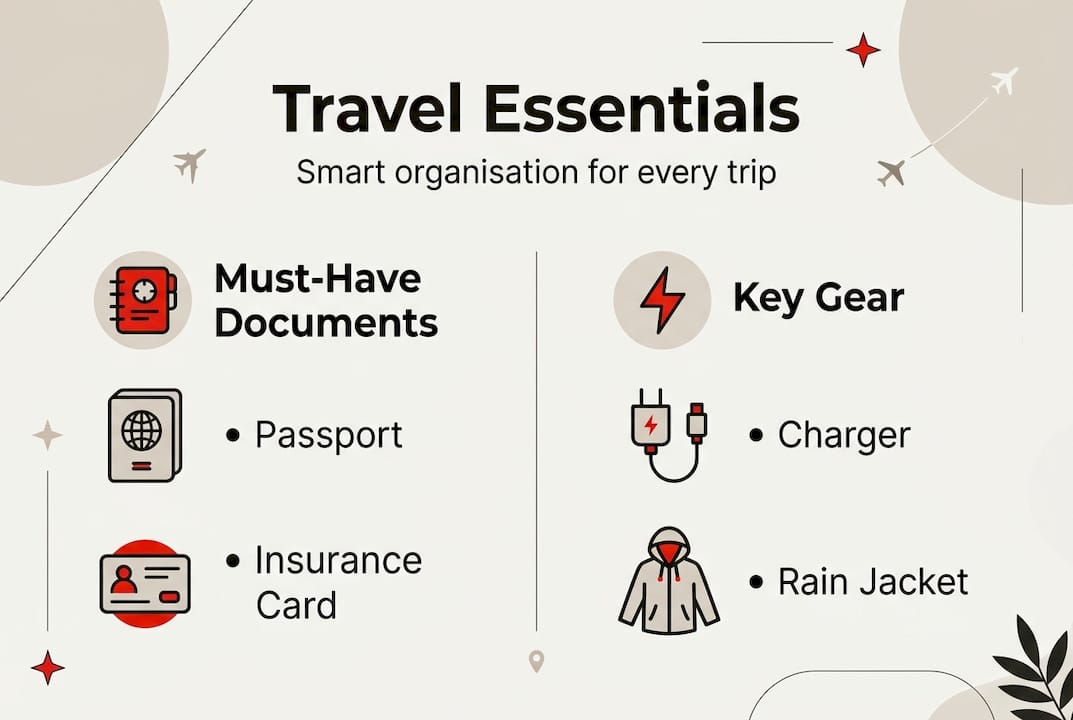
- Passport (with at least six months’ validity for international trips)
- National ID or driving licence
- Visa documents, if required for your destination
- Travel insurance certificate and emergency contact numbers
- Boarding passes or booking confirmations (printed and digital)
- Vehicle registration and breakdown cover documents
- Vaccination or health certificates where applicable
- Emergency contacts written on paper, not just saved in your phone
For families travelling with children, also include birth certificates, consent letters if one parent is absent, and any medical records for ongoing conditions. Group trips benefit from a shared digital folder where everyone can access documents.
When it comes to organising travel essentials, the most resilient system combines both paper and digital formats. Neither is foolproof on its own.
| Strategy | Advantages | Disadvantages |
|---|---|---|
| Paper copies | No battery needed, works everywhere | Can be lost, damaged, or stolen |
| Digital backups | Easily updated, accessible via cloud | Requires signal, battery, or device |
| Both combined | Maximum resilience | Requires initial effort to set up |
Pro Tip: Scan every document and email the files to yourself using a dedicated travel address. You can access them from any device, anywhere in the world, even if your phone is lost or dead.
If you want to go further, save scans to a cloud service and share access with a trusted person at home. Building strong expert packing tips habits around documentation early in your planning saves enormous stress later. Carry all originals in a slim waterproof document wallet, separate from your main luggage, so even a bag mishap doesn’t leave you stranded.
Ready your vehicle for the journey
Your vehicle is your most critical piece of gear on any road trip. Skipping pre-departure checks is one of the most common and costly mistakes travellers make. Vehicle preparation is critical for road trips, covering tyres, battery, fluids, lights, and brakes before you pull out of the driveway.
Follow this step-by-step pre-trip inspection:
- Tyres: Check tread depth, tyre pressure (including the spare), and look for visible cuts or bulges.
- Battery: Test charge level and inspect terminals for corrosion, especially before winter trips.
- Fluids: Top up engine oil, coolant, brake fluid, windscreen washer fluid, and power steering fluid.
- Lights: Test headlights, brake lights, indicators, and hazard lights. Replace any blown bulbs immediately.
- Brakes: Listen for squealing or grinding. If in doubt, book a professional check.
- Wipers: Replace blades that streak or skip. Visibility matters more than you think at motorway speed.
| Trip type | Minimum recommended checks |
|---|---|
| Short city drive | Tyres, lights, fuel |
| Long motorway journey | All fluids, tyres, battery, brakes |
| Remote or off-road adventure | Full inspection plus spare tyre and tow rope |
| Winter driving | Battery, antifreeze, wipers, ice scraper |
“A vehicle that breaks down far from help is not just inconvenient; it becomes a safety emergency. Your pre-trip inspection is your first line of defence.”
For in-depth preparation strategies, the long-distance driving guide at Convoy covers everything from motorway driving posture to fuel stop planning. Professional drivers and frequent road trippers alike benefit from understanding what every driver should prepare before heading out.
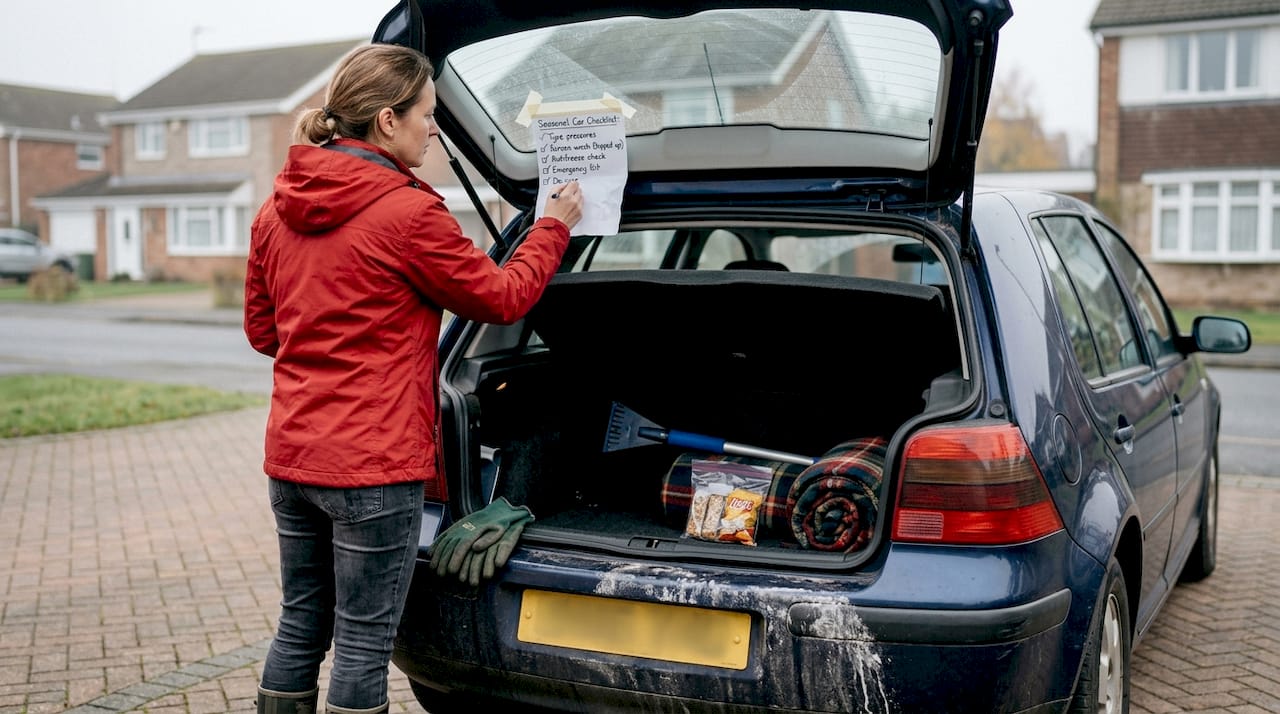
Pro Tip: Keep a seasonal checklist taped inside your boot. In winter, tick off ice scraper, antifreeze top-up, and extra blankets. In summer, add sunshade, extra water, and a cooling towel. Rotating your priorities by season means nothing critical gets forgotten.
Build a layered roadside emergency kit
Even a perfectly maintained vehicle can break down. Weather changes, punctures, and unexpected situations happen to experienced travellers too. The difference is whether you’re prepared. Roadside emergency kits should follow a layered approach covering mechanical, medical, and survival needs.
Think of it in three distinct layers:
Mechanical layer:
- Jumper cables or a portable jump starter
- Tyre repair kit and portable inflator
- Warning triangles or LED road flares
- Basic tool kit (screwdrivers, wrench, pliers)
- Tow rope
Medical layer:
- Comprehensive first aid kit including plasters, bandages, antiseptic wipes
- Prescribed medications and a small supply of pain relief
- Tourniquet and emergency foil blanket
- Whistle and small torch with spare batteries
Survival layer:
- At least two litres of water per person
- Non-perishable snacks such as nuts or energy bars
- Thermal blankets for each passenger
- Waterproof matches or lighter
- Spare phone charger or power bank
“The Red Cross recommends keeping enough emergency supplies to sustain your group for at least 72 hours when travelling in remote areas.”
The key insight most travellers miss is where they store this kit. It must be accessible within seconds, not buried beneath luggage. A dedicated tyre repair kit stored in a clearly labelled bag at the front of your boot can make the difference between a ten-minute fix and a two-hour wait for assistance.
Pro Tip: Prioritise multi-use gear wherever possible. A thermal blanket serves as a sun reflector, ground cover, and warmth source. A multi-tool replaces several individual items. Keeping the kit compact means it actually travels with you every time, rather than being left at home because it’s too bulky.
Pack for comfort and weather changes
Safety and preparation keep you out of trouble. Comfort keeps you sharp, patient, and genuinely enjoying the journey. These two goals are more connected than most travellers realise. Fatigue and discomfort are leading contributors to poor decision-making on long drives.
Essential comfort items to pack for any trip:
- Travel pillow and lightweight blanket
- Reusable insulated water bottle
- Healthy snacks that won’t melt or spoil
- Noise-cancelling earphones for passengers
- Entertainment or activities for children
- Portable phone mount for navigation
Weather changes are where many travellers get caught out. Multi-use, lightweight gear handles edge cases like sudden weather shifts or unexpected stops far more effectively than single-purpose items.
Packing by season and destination:
Summer and hot climates:
- High-SPF sunscreen and lip balm
- Electrolyte sachets to counter dehydration
- Sunglasses and a wide-brimmed hat
- Portable fan or cooling towel
Winter and cold climates:
- Thermal underlayers and extra socks
- Ice scraper and de-icer spray
- Insulated flask for warm drinks
- Emergency candles for warmth if stranded
Variable or unpredictable weather:
- Lightweight packable rain jacket
- Layered clothing system rather than bulky single items
- Both paper maps and a downloaded offline GPS app
On the subject of navigation, paper maps remain remarkably useful in remote areas where signal is unreliable. A dedicated GPS device is a strong middle ground. For practical travel hygiene essentials and road trip comfort gear, Convoy’s guides offer tested recommendations that work across trip types.
Pro Tip: Always carry a lightweight rain jacket in an outer pocket of your bag, not packed inside. If weather turns while you’re refuelling or at a roadside stop, you need it immediately, not after a five-minute rummage.
Why most travellers underestimate layered safety and what actually works
Here’s an uncomfortable truth: most standard packing checklists found online are built for ideal conditions. They assume your phone has signal, your car starts first time, and the weather stays predictable. Real travel rarely works that way.
Conventional checklists miss three categories of hidden risk: sudden mechanical failure, digital dependency, and environmental extremes. Adapting for conditions such as winter scrapers and blankets in cold weather, or electrolytes and sunscreen in heat, rarely features in basic advice. Yet these are the exact items that matter most when things go wrong.
The layered approach works because it forces you to think across scenarios rather than just ticking boxes. Mechanical tools solve one problem. Medical supplies solve another. Survival gear covers the gaps when help is far away. Together, they transform your kit from a formality into a genuine safety net.
We’d also argue that paper maps deserve a serious comeback. Electronics fail at the worst moments, and staying calm and focused in an emergency is significantly easier when you have a physical backup. The best checklist is also a living document. After every trip, update it based on what you needed but didn’t have, and remove items that never left the bag.
Gear up with Convoy: enhanced safety and organisation
Now that your checklist is solid, the right gear makes executing it straightforward. Convoy has been rooted in the transport world since 1991, and that heritage shows in the specificity and quality of what’s on offer.
Whether you’re a professional driver needing tachograph charts for trucks, a fleet operator sourcing a reliable tachograph sender, or a family road tripper building your first proper emergency kit, Convoy has products and guides tailored to your exact needs. Browse the full range of essential travel accessories and health tips for drivers to make your next journey your most prepared one yet.
Frequently asked questions
What documents should I carry for international trips?
Bring your passport, visa, national ID, and travel insurance certificate, and keep both printed copies and digital backups stored separately. Sharing digital access with a trusted contact at home adds an extra layer of security.
How can I assemble a roadside emergency kit for road trips?
Build it in three layers: mechanical items such as jumper cables and tools, medical supplies including a first aid kit and tourniquet, and survival essentials like water, blankets, and a power bank.
What’s the best way to prepare my vehicle for a long journey?
Work through a structured checklist covering tyres, battery, and fluids as well as lights and brakes, then pack a dedicated emergency kit in an accessible spot in your boot.
How can I adapt my packing checklist for different climates?
For cold weather, add a thermal blanket and scraper; for heat, pack sunscreen and electrolyte sachets. Layering your clothing rather than packing bulky single items gives you flexibility for unpredictable conditions.
Recommended
- Expert packing tips for long journeys: comfort and organisation – Convoy Vibe
- Essential road trip gear: maximise safety, comfort, and fun – Convoy Vibe
- Essential travel accessories every frequent traveller needs – Convoy Vibe
- Travel hygiene essentials list for clean, comfortable journeys – Convoy Vibe