

Fatigue hits somewhere around hour four. Your back aches, your energy flags, and the service station meal you grabbed is already sitting heavily in your stomach. For professional drivers, families on long hauls, and frequent travellers alike, poor health on the road is not just uncomfortable — it is a genuine safety risk. The good news is that most travel health problems are entirely preventable with the right preparation and a few smart habits. This guide covers everything from pre-trip planning and food choices to movement routines, hygiene, and keeping the whole family well throughout the journey.
Table of Contents
- Essential preparation before you travel
- Smart eating and drinking while on the road
- Movement, rest and alertness: keeping your body in check
- Keeping clean and healthy: hygiene, sickness, and family travel
- Why traditional travel health advice is not enough
- Stay healthy and travel smart with Convoy Vibe
- Frequently asked questions
Key Takeaways
| Point | Details |
|---|---|
| Preparation matters most | Planning your health kit and knowing your needs is the foundation of safe travels. |
| Choose food and drink wisely | Smart choices at meal stops prevent illness and sustain long-term energy. |
| Move and rest regularly | Frequent breaks and good posture keep you safe and alert throughout your journey. |
| Prioritise hygiene and family wellness | Regular handwashing and thoughtful packing reduce risks for solo travellers and families alike. |
Essential preparation before you travel
Success on the road starts well before you turn the key. The travellers who arrive feeling good are almost always the ones who prepared properly at home, not the ones who winged it and hoped for the best.
The first step is sorting your health admin. Check whether your destination requires any vaccinations and confirm you have enough of any regular prescriptions to last the entire trip, plus a few extra days as a buffer. CDC travel health advice recommends researching destination-specific risks and confirming your immunisations are current before departure. For professional drivers, this preparation takes on an additional dimension: DOT physical compliance requires blood pressure below 140/90 and properly managed conditions such as diabetes or sleep apnoea, so staying on top of these is not optional.
Your driver trip preparation checklist should include a dedicated travel health kit. Think of it as your on-road medicine cabinet. At a minimum, pack:
- Hand sanitiser (at least 60% alcohol)
- Basic over-the-counter medicines: pain relievers, antihistamines, anti-diarrhoeal tablets
- Sunscreen and insect repellent if relevant to your route
- A reusable water bottle
- Healthy snacks to avoid desperate service station choices
- Any personal prescriptions, clearly labelled
Families travelling with young children or anyone managing a chronic condition should add relevant extras, such as a thermometer, child-appropriate medicines, and any specialist items recommended by their GP.
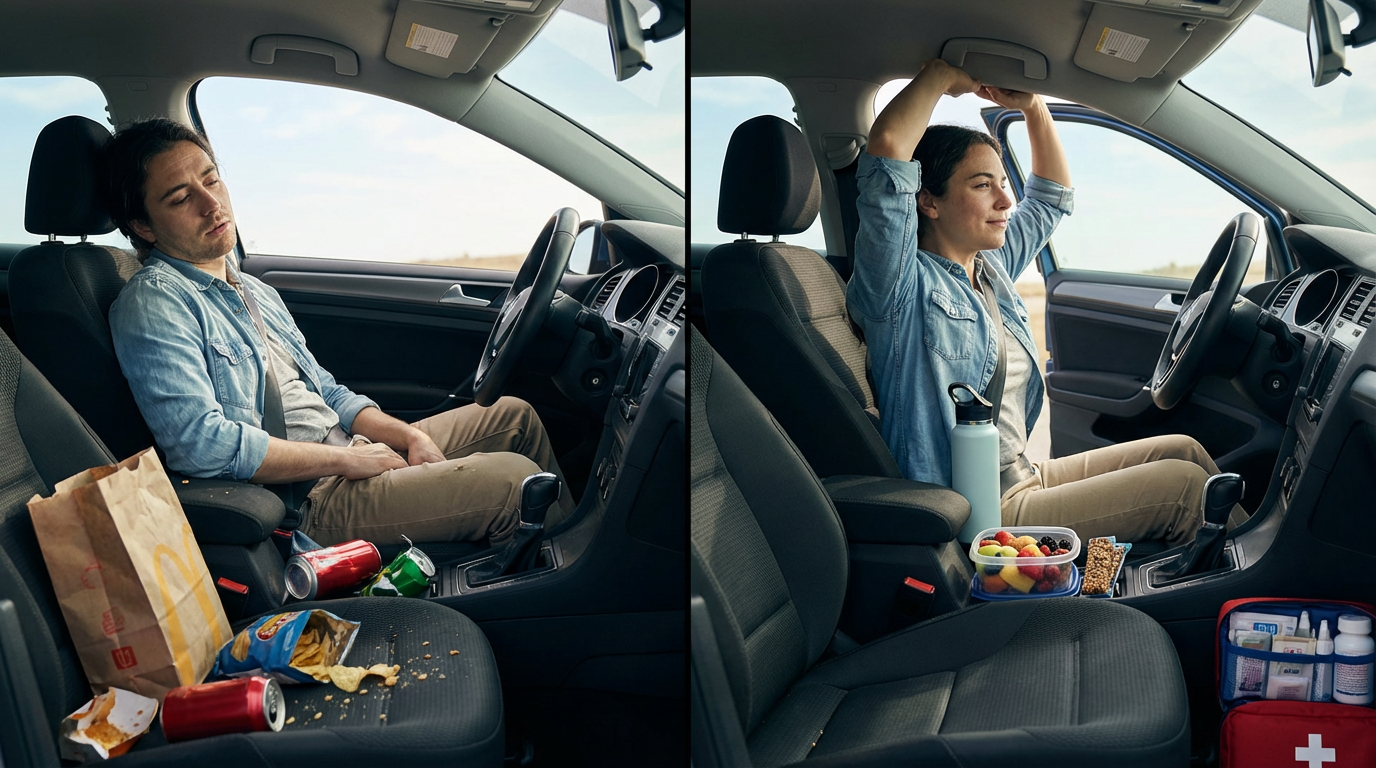
Pro Tip: Build a simple one-page checklist and laminate it. Stick it inside a cupboard or travel bag so you run through it before every trip, not just the big annual holiday.
| Preparation item | Who it applies to | Why it matters |
|---|---|---|
| Vaccination check | All travellers | Prevents destination-specific illness |
| Prescription top-up | Chronic condition sufferers | Avoids running out mid-journey |
| DOT physical compliance | Professional drivers | Legal and safety requirement |
| Travel health kit | All travellers | Handles minor illness without panic |
| Child medicines and thermometer | Families | Fast response to kids falling ill |
For packing tips for long journeys that go beyond just health items, it is worth thinking about comfort and organisation together — a well-packed vehicle reduces stress, which itself has a direct impact on your wellbeing.
Smart eating and drinking while on the road
After packing well, your next hurdle is making safe, healthy choices during meal and snack stops. This is where most travellers quietly abandon their good intentions, lured by fried food, sugary drinks, and the convenience of whatever is closest.
Food and water travel safety guidance is clear: eat fully cooked hot foods, peel your own fruit, and avoid raw or undercooked meat. If you are travelling internationally, treat local tap water with caution. Unless you are confident it is safe, stick to bottled or disinfected water. This applies to ice in drinks too, which is often overlooked.
Hydration is one of the most underrated factors in road wellness. Aim for around 64 ounces (roughly two litres) of water daily. Caffeine and fizzy drinks are tempting on long drives but they contribute to dehydration and energy crashes. Swapping even one coffee for a bottle of water makes a measurable difference by mid-afternoon.
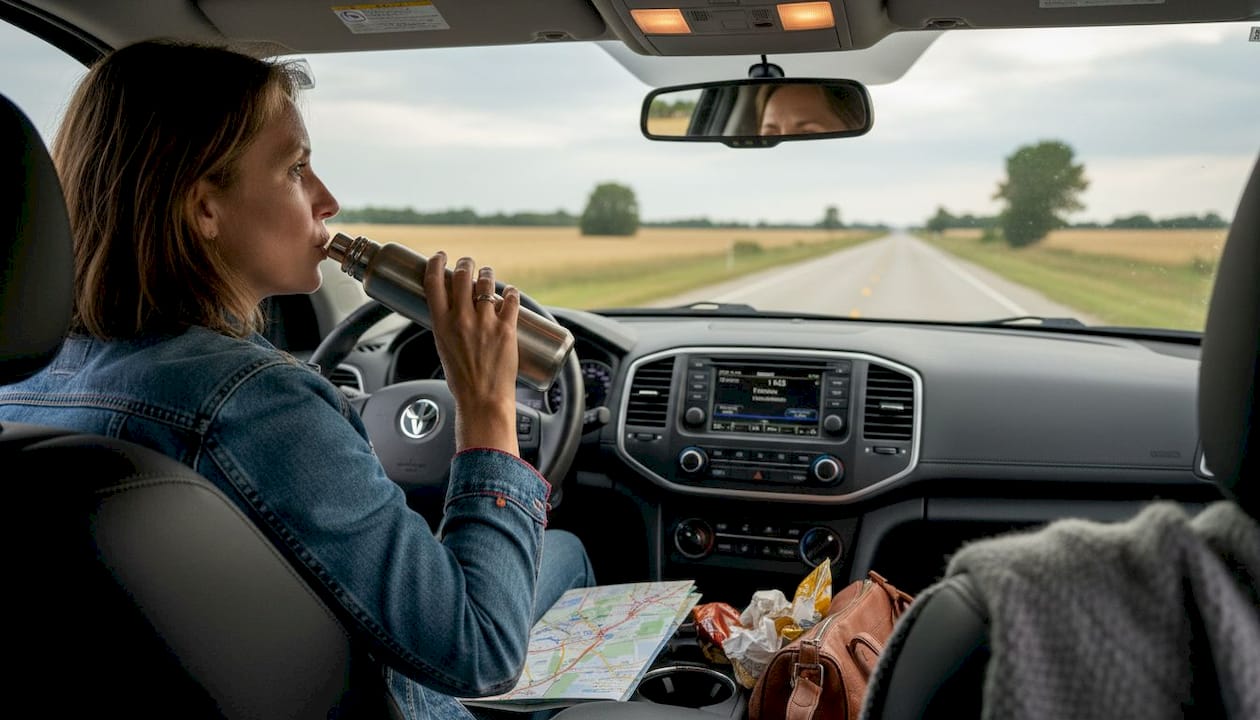
For road trip food and gear tips, the smartest move is preparing your own snacks. Protein-rich options like nuts, boiled eggs, or cheese keep energy stable far better than crisps or chocolate bars. Vegetables and fruit that travel well, such as carrots, apples, and grapes, are easy to pack and genuinely satisfying.
Pro Tip: Pack a small soft cooler in the footwell or boot. Pre-fill it with water bottles, fruit, and a few protein snacks. You will spend less money, eat better, and avoid the temptation of fast food entirely.
| Category | Smart choice | Risky choice |
|---|---|---|
| Drinks | Water, herbal tea | Fizzy drinks, excessive caffeine |
| Snacks | Nuts, fruit, boiled eggs | Crisps, sweets, pastries |
| Meals | Cooked hot food, salads with peeled veg | Raw meat, unpeeled produce, street food (unknown source) |
| Water source | Bottled or disinfected | Unverified tap water, ice from unknown source |
The food and water travel safety principle of choosing protein and vegetables over fried or sugary truck stop fare is not just about avoiding illness — it directly affects your alertness and mood behind the wheel.
Movement, rest and alertness: keeping your body in check
While food fuels your journey, movement and rest keep your body and mind resilient behind the wheel or in the passenger seat. Sitting still for hours is genuinely harmful, and not in a vague, long-term way. The risks are immediate.
Important: Long periods of sitting without movement significantly increase your risk of deep vein thrombosis (DVT), a condition where blood clots form in the legs. Preventing DVT on long drives requires getting up to walk and stretch every two to three hours, staying hydrated, and wearing compression socks if you are at higher risk.
For professional drivers, managing driver fatigue is a core part of the job, not an afterthought. Fatigue warning signs include heavy eyelids, drifting between lanes, missing exits, and irritability. If you notice any of these, pull over safely and rest — no schedule is worth the risk.
Here are practical steps to maintain movement and alertness on long journeys:
- Set a phone reminder every two hours to stop, get out, and walk for at least five minutes.
- Do simple stretches at each stop: calf raises, shoulder rolls, and a brief walk around the vehicle.
- Adjust your seat and steering wheel position before departure to support your lower back.
- Take short naps of 20 minutes if fatigue sets in — longer naps can leave you groggy.
- Avoid driving during your body’s natural dip in alertness, typically between 2pm and 4pm and after midnight.
Pro Tip: Use your phone’s alarm function to set movement reminders before you set off. It takes 30 seconds and removes the need to remember mid-drive.
Building driver routines for focus around regular breaks and intentional rest is one of the highest-impact changes you can make. And for staying comfortable on the road over extended periods, posture and seat support matter just as much as the breaks themselves.
Keeping clean and healthy: hygiene, sickness, and family travel
Physical comfort is one thing — staying germ-free and proactively addressing sickness risks is just as vital, especially for families. Shared surfaces, rest stop toilets, and enclosed vehicles are all environments where illness spreads quickly.
Handwashing and sanitiser tips from the CDC are straightforward: wash hands with soap and water or use a sanitiser with at least 60% alcohol before eating and after using the bathroom. In higher-risk settings such as busy airports or public transport, wearing a mask adds a meaningful layer of protection.
For families, car sickness prevention for families is often the most pressing concern on long drives. Children are particularly susceptible. Encourage them to look out of the window at the horizon rather than at screens or books. Offer small bland snacks rather than large meals before or during the journey. Fresh air from a slightly open window helps considerably, and having a distraction ready — an audiobook or simple game — keeps their mind off nausea.
Pro Tip: Pack a dedicated “sick kit” in an easily accessible bag: a change of clothes, sick bags, wet wipes, hand sanitiser, and child-appropriate medicines such as Dramamine or Calpol. You will hope never to use it, but you will be very glad it is there.
Here is a quick hygiene and illness prevention checklist for all travellers:
- Wash or sanitise hands before every meal and after every toilet stop
- Keep hand sanitiser in the door pocket for easy access
- Disinfect high-touch surfaces in hire vehicles (steering wheel, door handles, gear stick)
- Pack wet wipes for quick clean-ups at rest stops
- Keep sick bags within reach for children prone to motion sickness
- Include basic medicines in your kit: pain relievers, antihistamines, and anti-nausea tablets
- Ensure packing health kits covers both adults and children with age-appropriate items
Why traditional travel health advice is not enough
Most travel health guides hand you a generic list and send you on your way. Drink water. Wash your hands. Get some sleep. It is not wrong, exactly — but it treats every traveller as the same person making the same journey, and that is where it falls short.
A professional driver covering 500 miles a day has entirely different needs from a family doing a once-a-year road trip. A traveller managing a chronic condition needs a more specific plan than someone in perfect health. The real skill is not memorising a checklist — it is adapting those principles to your actual life on the road.
At Convoy, we have seen this pattern repeatedly: people who genuinely stay healthy while travelling are the ones who have experimented, made mistakes, and built routines that fit them. They tried the 2-hour movement reminder and found 90 minutes worked better. They discovered that packing a specific snack killed their afternoon energy slump. Small, personalised adjustments make a far bigger difference than following generic advice perfectly.
Use the frameworks in this guide as a starting point, not a fixed prescription. Test what works, drop what does not, and build a travel health routine that you will actually stick to.
Stay healthy and travel smart with Convoy Vibe
Preparation and trusted resources make the greatest difference — here is how Convoy Vibe supports healthy, safe journeys.

At Convoy, we understand that staying well on the road means having the right gear and the right knowledge at hand. Whether you are a professional driver or a family setting off on a long trip, our range of practical travel solutions is built around real road experience going back to 1991. Protect your cargo and peace of mind with our cargo and bicycle alarm, and explore the full range of Convoy Vibe travel gear designed to keep your journey comfortable, safe, and well-organised from start to finish.
Frequently asked questions
What is the minimum you should pack in a road trip health kit?
At minimum, include hand sanitiser, basic over-the-counter medicines such as pain relievers, antihistamines, and anti-diarrhoeal tablets, plus drinking water and a few healthy snacks.
How often should you move or stretch on long drives?
Stretch or stand every 2 to 3 hours on long drives to reduce your risk of blood clots and keep your body comfortable throughout the journey.
Is it safe to drink tap water while travelling?
Avoid local tap water unless you are certain it is safe — use bottled or disinfected water to significantly reduce your risk of stomach illness.
How do you help kids avoid car sickness when travelling?
Encourage children to look out of the window, offer small bland snacks, keep fresh air circulating, and have a distraction ready to prevent car sickness on long journeys.