

Most travellers assume that getting ready for a trip means throwing clothes into a bag and checking the departure time. But genuine journey preparation is a different beast entirely. It covers everything from validating your passport and booking strategically timed vaccines to building flexible itineraries and packing gear that actually earns its weight. Whether you’re a professional driver clocking thousands of kilometres a year, a family planning a road trip, or an adventurer heading somewhere genuinely remote, the difference between a smooth journey and a stressful one almost always comes down to how well you prepared before you left.
Table of Contents
- What journey preparation really means
- Essential steps for effective journey preparation
- Dealing with special cases and unexpected challenges
- Expert insights: safety and comfort on the road
- Our take: what most travellers miss in their journey preparation
- Be fully prepared for your next journey
- Frequently asked questions
Key Takeaways
| Point | Details |
|---|---|
| Preparation is holistic | True journey preparation means planning, safety, health, documents, and gear together. |
| Check edge cases | Special travellers like families or pet owners must take extra steps such as consent letters and insurance. |
| Flexible planning | Creating a flexible itinerary and packing versatile items helps handle unexpected issues. |
| Safety matters | Using official tools, insurance, and reliable navigation keeps journeys safe and comfortable. |
What journey preparation really means
Journey preparation is not a single task. It’s a layered process that touches planning, logistics, health, safety, and mindset. Many travellers treat it as a checklist they rush through the night before. That approach works right up until something goes wrong, and then it really doesn’t.
True preparation means accounting for what you need before, during, and after your journey. The core steps include defining your goals and budget (flights typically absorb 30–40% of total travel spend, accommodation around 30%), booking transport and lodging strategically, creating flexible itineraries, checking documents such as passport validity of six months or more and visas, completing health preparation including vaccines four to six weeks before departure, and packing light with versatile, multi-purpose items. That’s a significant scope of work, and each element has a knock-on effect on the others.
“Preparation is not about eliminating uncertainty. It’s about giving yourself enough foundation that uncertainty doesn’t derail you.”
When you frame preparation this way, it stops feeling like a chore and starts feeling like a form of respect for your own time and wellbeing. If you’ve ever struggled with where to begin, organising travel essentials is a practical starting point that reduces the mental load considerably.
Here’s a useful overview of how journey preparation breaks down across its key stages:
| Stage | Key focus areas | Timing |
|---|---|---|
| Planning | Goals, budget, itinerary structure | 2–6 months before |
| Booking | Flights, accommodation, transport | 1–4 months before |
| Documentation | Passport, visas, consent letters | 2–3 months before |
| Health preparation | Vaccines, prescriptions, insurance | 4–6 weeks before |
| Packing | Versatile clothing, gear, documents | 1–2 weeks before |
| Final checks | Confirmations, emergency contacts, offline maps | 24–48 hours before |
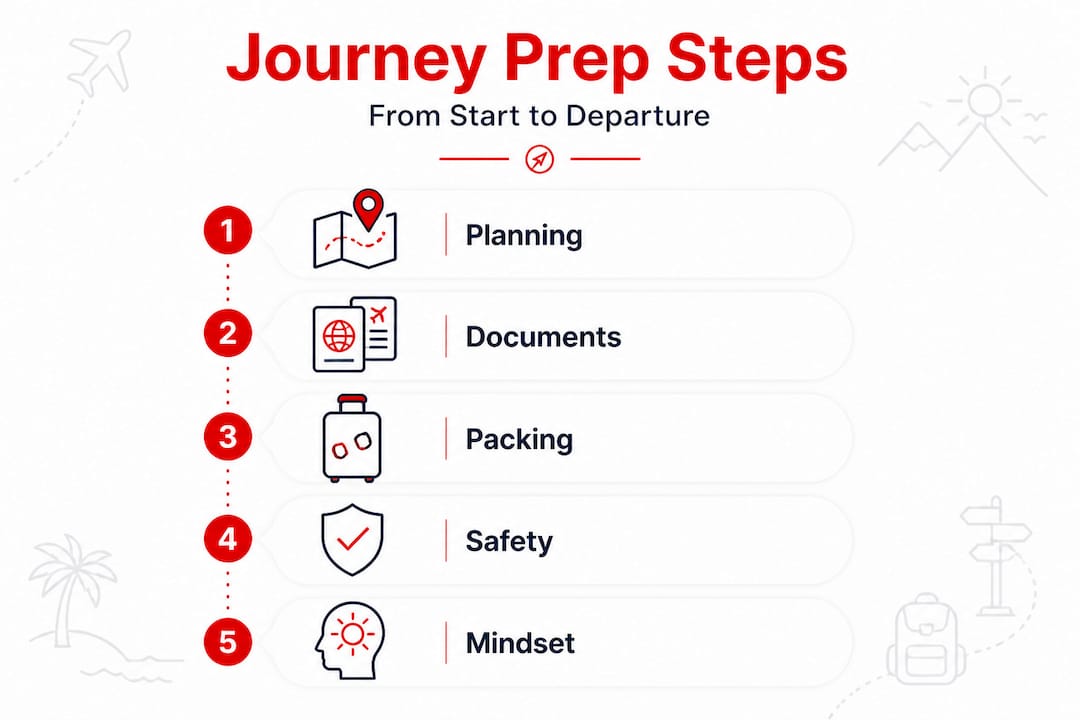
Each stage feeds the next. Skipping one doesn’t just create a gap; it can undo the work you’ve already done in a previous stage.
Essential steps for effective journey preparation
Having defined journey preparation, it’s time to detail how you actually put this into practice. The steps are sequential for a reason. Trying to pack before you’ve confirmed your destination type, climate, or duration is guesswork. Working through each stage in order makes the whole process faster and more reliable.
Here are the key steps to follow:
- Define your journey goals. Are you travelling for rest, adventure, work, or family? Your purpose shapes every decision that follows, from what you pack to what cover you need.
- Set a realistic budget. Allocate proportionally. As a general guide, flights and accommodation together account for 60–70% of typical trip costs, leaving the remainder for food, transport, activities, and contingencies.
- Book strategically. Secure flights and accommodation early, especially for peak periods. Use flexible booking options where possible to account for itinerary changes.
- Check and renew documents. Your passport must be valid for at least six months beyond your return date. Research visa requirements for every country you’ll enter, not just your primary destination.
- Sort health preparation. Visit a travel health clinic or GP at least four to six weeks before departure. Some vaccines require multiple doses spread over several weeks.
- Build a flexible itinerary. Plan key milestones but leave breathing room. Rigid itineraries create stress when delays happen, and delays always happen.
- Pack smart. Choose versatile, layerable clothing and gear that handles multiple scenarios. Our travel gear checklist is a solid reference for making sure nothing important gets left behind.
- Prepare for health on the road. Staying well during a long journey is a preparation task, not just a lucky outcome. Hydration, rest, and movement planning all count, and our guide on road health essentials covers these in depth.
Pro Tip: Build a “flexible buffer” into every day of your itinerary, roughly 20–25% of your planned time. This isn’t wasted time; it’s what lets you recover from delays, explore something unexpected, or simply rest without throwing your entire schedule into chaos.
The temptation is to treat these steps as optional extras once you’ve booked flights. But document issues, missed vaccines, and overpacked bags cause the majority of preventable travel problems. Systematic preparation is genuinely faster than reactive problem-solving mid-journey.
Dealing with special cases and unexpected challenges
Core steps covered, let’s consider what happens when things are less straightforward. Not every journey involves a healthy adult with a standard passport and a hotel booking. Many of the most common travel scenarios involve additional layers of complexity that standard preparation guides simply don’t address.
Here are the most frequent edge cases and what they require:
- Travelling with children. Children under 18 travelling without both parents may need notarised consent letters, depending on the destination country. Car seats must meet local standards, not just your home country’s regulations.
- Travelling with pets. Vaccinations, microchipping, health certificates, and import permits vary significantly between countries. Travel insurance for pets is also worth factoring in, as vet costs abroad can be considerable.
- Travellers with health conditions. Carry sufficient medication in original packaging, with prescriptions translated if needed. Travel insurance must explicitly cover pre-existing conditions. Research local healthcare availability at your destination.
- Remote or off-grid travel. Standard mobile coverage becomes unreliable or non-existent. Satellite communication devices, offline maps downloaded to your device, and emergency protocols become essential rather than optional.
- Weather variability. Multi-climate or multi-season trips require layers and tested footwear. Edge cases like these demand that you think beyond the expected conditions and prepare for what could realistically happen.
Here’s how standard preparation compares with special-case preparation:
| Area | Standard journey prep | Special-case prep |
|---|---|---|
| Documents | Passport, visa | Consent letters, pet permits, medical records |
| Health | Vaccines, basic kit | Extra medication, specialist insurance, translated prescriptions |
| Communication | Mobile phone | Satellite device, offline maps, emergency protocols |
| Gear | Standard packing | Climate-tested layers, child safety equipment, pet supplies |
| Insurance | Basic travel cover | Pre-existing condition cover, evacuation cover, pet cover |
Families in particular benefit enormously from detailed advance planning. Our guides on travelling with children and family road travel address the specific logistics of keeping everyone safe, comfortable, and actually enjoying the journey rather than enduring it.
Expert insights: safety and comfort on the road
Edge cases aside, experts have distilled what matters most when preparing for any journey. Safety and comfort aren’t opposites; they’re deeply connected. A tired, disorganised traveller makes worse decisions, and worse decisions lead to avoidable safety issues.
Here’s what field experience consistently points to:
- Register your trip officially. The U.S. State Department stresses STEP enrolment for international travellers. The UK equivalent is the Foreign Commonwealth and Development Office travel registration. These services allow governments to reach you in emergencies.
- Don’t skip travel insurance. Comprehensive cover costs a fraction of what a single medical evacuation or cancelled trip costs out of pocket.
- Use real-time traffic tools for commutes and road journeys. Apps like Waze or Google Maps have significantly reduced the stress of long-distance driving by providing live route adjustments.
- Carry a satellite communication device for remote travel. Mobile signal cannot be relied upon outside urban areas in many parts of the world.
- Plan rest stops deliberately. Driver fatigue is a genuine safety risk, not just an inconvenience. Build rest breaks into your driving schedule as firmly as you’d build in fuel stops.
- Test your gear before you leave. Shoes that haven’t been broken in, sleeping bags that haven’t been unpacked, or torches with flat batteries are problems that belong at home, not in the field.
“Safety is not something you add to a journey. It’s something you build into the preparation.”
Our guide on long-distance driving safety covers the specific needs of drivers covering serious mileage, from managing fatigue to vehicle checks. For packing with comfort in mind, the expert packing tips guide goes deeper into the organisational decisions that make long journeys genuinely comfortable rather than merely survivable.
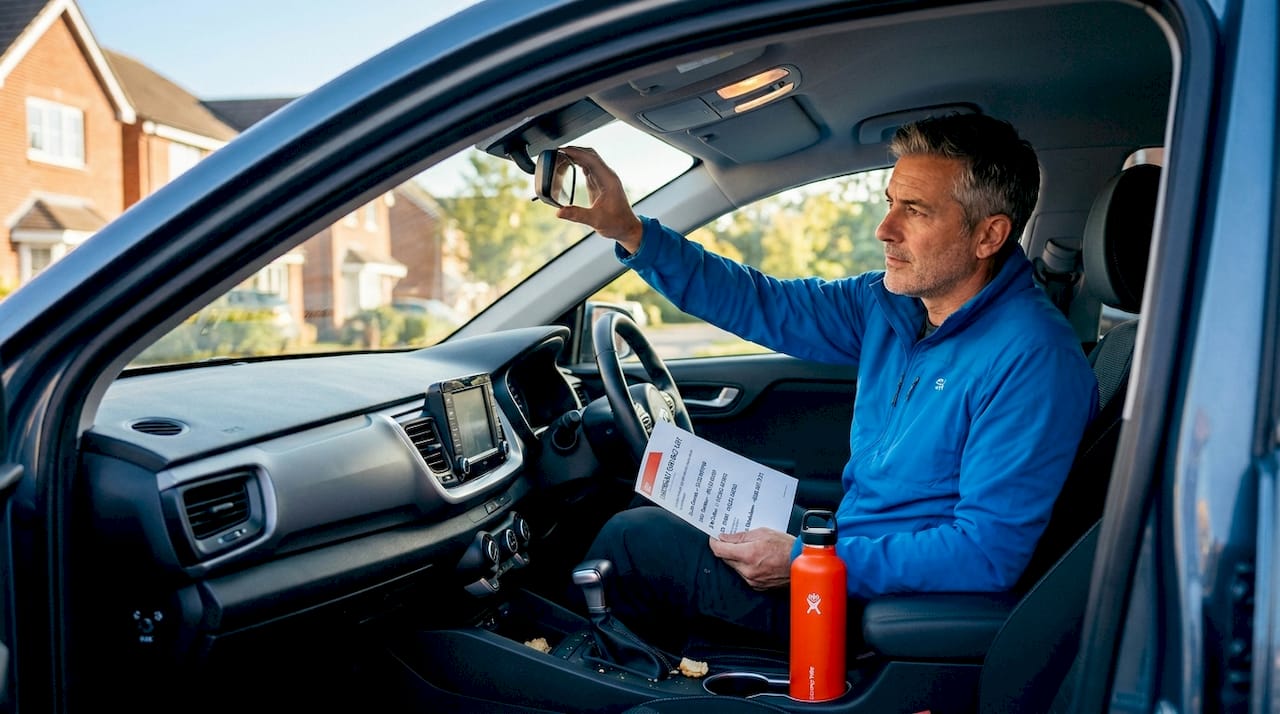
Technology plays an increasingly useful role here. Offline navigation, translation apps, and emergency contact protocols all reduce the cognitive load of travelling, which in turn keeps you sharper and safer.
Our take: what most travellers miss in their journey preparation
There’s a version of journey preparation that looks thorough from the outside but has real gaps underneath. People spend hours researching accommodation and minutes checking whether their passport is valid for the full trip duration. They agonise over what to wear and forget to check whether their destination requires a visa on arrival. These aren’t unusual oversights; they’re the norm.
From where we sit, having spent years helping travellers get genuinely road-ready, three things are consistently underestimated.
First, document and health requirements. Most people assume their passport is fine and their existing health cover will do. Often neither is true. A passport that expires three months after your return date will get you turned away at certain borders. Existing health cover frequently excludes travel, and travel insurance often excludes pre-existing conditions unless specifically declared. These aren’t edge cases; they catch experienced travellers off guard regularly.
Second, the mindset and mental load of travel. Gear is visible. Mindset is not. But arriving at a journey already mentally exhausted because preparation was chaotic and last-minute is a real problem. Preparation done calmly and in stages doesn’t just produce better outcomes practically; it means you actually start your journey feeling ready rather than frazzled. Knowing how to pack smart is partly a physical act and partly a mental one.
Third, preparing for genuine emergencies. Most travellers carry a first aid kit and call it done. Fewer have a written emergency protocol, know the address of their nearest embassy, or have shared their itinerary with someone at home. These take minutes to set up and matter enormously if something goes wrong.
Good preparation doesn’t mean eliminating spontaneity. It means building a foundation solid enough that you can actually enjoy the unexpected moments rather than being undone by them.
Be fully prepared for your next journey
Understanding what journey preparation really involves is the first step. Equipping yourself properly is the second.

At Convoy, we’ve been part of the road culture since 1991, and we know that the right gear makes a genuine difference to safety and organisation on the move. Whether you’re managing vehicle security with a fuel anti-theft device for long haul driving or staying visible and safe with a reflective safety harness, practical kit bridges the gap between planning on paper and being genuinely ready on the road. Browse our full range of travel gear and driver essentials at convoy.eu to find solutions built for people who take their journeys seriously.
Frequently asked questions
What documents do I need for international journeys?
You need a passport valid for six months beyond your return date, the correct visas for each country you’ll enter, and sometimes notarised consent letters if children are travelling without both parents.
How early should I get travel vaccines?
Visit a travel health clinic or GP at least four to six weeks before your departure date, as some vaccines require multiple doses spaced weeks apart.
What’s the best way to pack light for a journey?
Choose versatile, layerable items that work across different situations, and use a structured checklist to avoid both over-packing and leaving essentials behind.
What if I’m travelling with pets or in remote areas?
For pets, bring extra medication, health certificates, and specialist insurance; for remote travel, satellite communication devices and pre-downloaded offline maps are essential safety tools.
How can I make sure I’m safe on any journey?
Register your travel with your government’s official scheme such as STEP enrolment, secure comprehensive travel insurance, and carry reliable navigation and communication tools suited to your route.